
Modular plastic chain plate supplier
What are the advantages of flexible chain conveyor lines?
Flexible chain conveyor lines are the preferred choice for simple automation, offering the following advantages:
- Flexible chain width: Multiple specifications are available, including widths of 44, 65, 85, 105, 140, 175, and 295 mm, suitable for products with widths from 20-500 mm.
- Flexible chain styles: Various styles are available to suit different products and needs, including anti-slip, baffle, bottle-clamping, and wear-resistant types.
- Modular design: Each component of the flexible chain is custom-molded, ensuring precision and standardization, shortening production cycles, and saving labor.
- Small turning radius: The toothed design of the flexible chain reduces space requirements; a turning radius of only 150 mm allows for unobstructed turning even in small areas. 5. Flexible chain plates can be used in screw conveyors: Flexible chain plates offer high flexibility, perfectly connecting equipment with varying heights via screw conveying, while also providing cooling and buffering functions within limited space.
- Xinzhongzhi Company has independently developed corrosion-resistant flexible chain plates, high-temperature resistant flexible chain plates, flame-retardant flexible chain plates, and heavy-duty flexible chain plates to meet the production needs of special environments, based on different customer requirements.
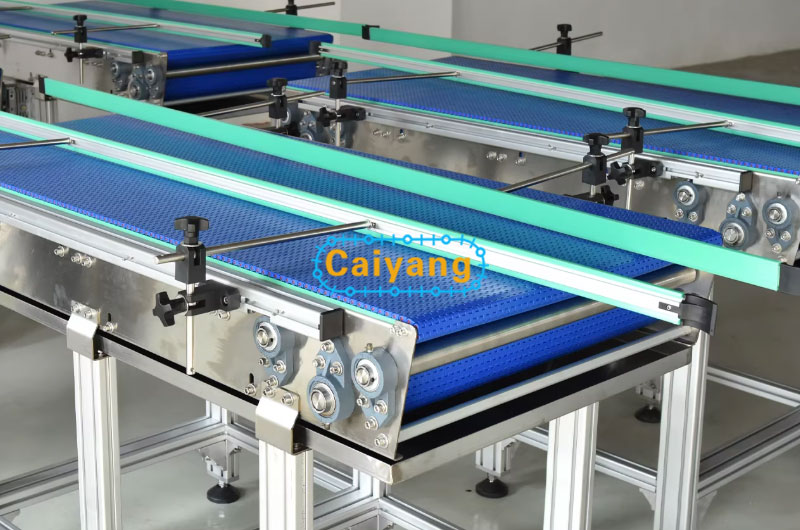
Flexible conveyor systems are now widely used conveyor equipment. They feature standardized aluminum alloy profiles and matching drive heads and tails. Flexible conveyor systems can achieve straight-line conveying and transport in complex environments such as turning and climbing slopes.
Flexible conveyor systems, also known as toothed chain conveyors, are automated equipment used to replace traditional belt conveyors. Their applications include the food and beverage and logistics conveying industries. They feature high conveying speeds, flexible configuration, and flexible splicing of conveyor width and length, saving users significant costs in later modification and maintenance.
The combination of toothed chain conveyors and flexible conveyor systems improves the appearance quality of the conveyor, improves traditional conveying methods, and elevates the technological level of automated production.
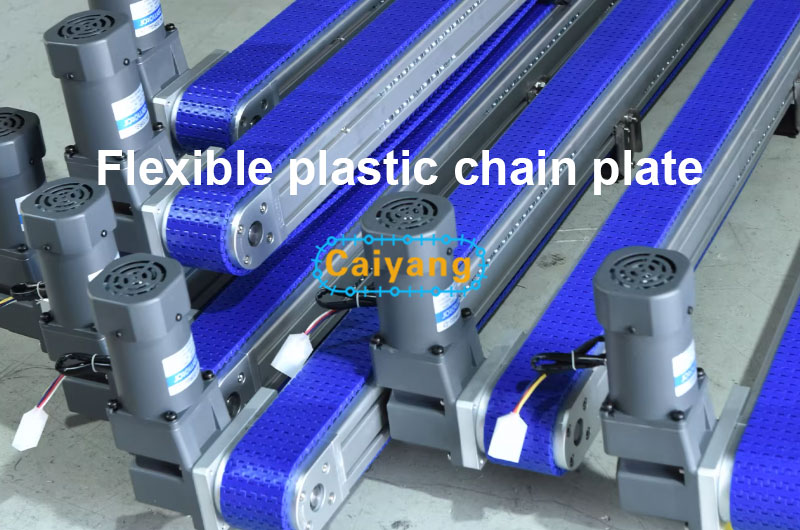
Flexible plastic chain conveyors are conveyor belts assembled from engineering plastic modules, capable of flexibly turning and climbing inclines. Their value lies in achieving three-dimensional, compact material transport within confined spaces.
They consist of multiple modular chain links connected by pins, typically made of engineering plastics such as polyoxymethylene (POM), polypropylene (PP), and nylon (PA), and can bend horizontally, vertically, and obliquely.
Key Features:
Flexible routing: Small turning radius and strong climbing ability, suitable for narrow workshops and complex paths.
Quiet and clean operation: Low operating noise, no lubrication required, good hygiene, suitable for industries such as food and pharmaceuticals.
Durable and worry-free: Wear-resistant and resistant to acid and alkali corrosion, low maintenance costs; modular design allows for direct replacement of damaged sections.
Easy installation: The entire line is mostly composed of plastic chain links and an aluminum alloy frame, allowing for assembly and disassembly using ordinary hand tools.
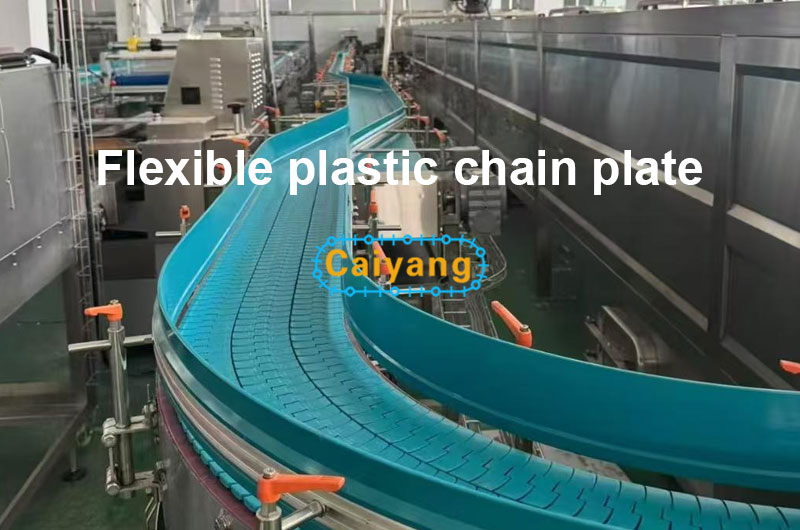
Flexible conveyor chains, also known as plastic conveyor chains or engineering plastic conveyor chains, are a type of conveyor chain made of engineering plastics. They are widely used in conveyor lines in industries such as food, beverage, pharmaceuticals, chemicals, tobacco, glass, ceramics, woodworking, papermaking, and printing. Flexible conveyor chains are lightweight, aesthetically pleasing, durable, and environmentally friendly, while also possessing excellent corrosion resistance, high-temperature resistance, and low-temperature resistance.
The characteristics of flexible conveyor chains include the following:
- Lightweight and aesthetically pleasing: Flexible conveyor chains are lightweight, easy to install, and aesthetically pleasing, allowing them to blend well into various conveying environments.
- Strong corrosion resistance: Due to the special properties of the material, flexible conveyor chains have excellent corrosion resistance, adapting to various acidic and alkaline environments and are not easily damaged by corrosion.
- Good high-temperature resistance: Flexible conveyor chains can operate in high-temperature environments without easily deforming or aging, ensuring the stability and reliability of the conveying process.
- Good low-temperature resistance: In low-temperature environments, flexible conveyor chains maintain good toughness and strength, without becoming brittle.
- High Conveying Efficiency: Flexible chain plates can withstand large loads and operate smoothly, achieving efficient and stable conveying.
- Easy Maintenance: Maintenance of flexible chain plates is relatively simple and convenient; regular cleaning and inspection are sufficient to ensure normal operation.
- Environmentally Friendly and Safe: Flexible chain plates are made of environmentally friendly materials, are non-toxic and odorless, safe and reliable, and meet the requirements of modern industrial production.
In the food and beverage industry, flexible chain plates are mainly used to convey bottled beverages, canned goods, and bagged foods. Because these products require high or low temperature processing, flexible chain plates must have good heat and cold resistance to ensure product quality and safety. At the same time, due to the very high hygiene requirements of the food and beverage industry, the materials of flexible chain plates must meet food-grade requirements, ensuring they are non-toxic and odorless and will not contaminate food.
In the pharmaceutical industry, flexible chain plates are mainly used to convey medicines, medicine bottles, and medicine bags. Since the quality of medicines is directly related to patients’ health and lives, flexible chain plates must have high stability and reliability to ensure that medicines are not damaged or deteriorated during transportation. Meanwhile, due to the diverse packaging materials used in pharmaceuticals, flexible conveyor belts also need to be adaptable to various packaging materials.
In the tobacco industry, flexible conveyor belts are primarily used for conveying tobacco leaves and tobacco products. Because tobacco leaves are lightweight and fragile, flexible conveyor belts require a lightweight design and excellent shock absorption and impact resistance. Furthermore, tobacco products have stringent packaging and labeling requirements, necessitating that flexible conveyor belts adapt to diverse packaging and labeling needs.
In conclusion, as a high-performance conveyor component, flexible conveyor belts have broad application prospects and excellent performance characteristics. In future development, with technological advancements and expanding application demands, the performance and application areas of flexible conveyor belts will continue to expand and innovate.
https://caiyangbelt.com/what-are-the-advantages-of-flexible-chain-conveyor-lines/
Flexible plastic chain plate