
Modular plastic chain plate supplier
conveyor belt manufacturers in china
Plastic chain conveyors represent a revolution in traditional belt conveyors. They overcome the drawbacks of belt conveyors, such as difficult maintenance and susceptibility to tearing, punctures, and corrosion, providing customers with a safe, fast, and easy-to-maintain conveying method. Plastic chain conveyors are assembled from chain plates made of engineering plastics. Modular chain plates interlock or interlock using a brick-laying method and are assembled together by full-length pins. This design fundamentally improves the strength of the conveyor belt. Baffles and side plates can also be interlocked with hinge pins, becoming an integral part of the conveyor belt. Plastic chain conveyors come in various forms, are flexible in assembly, and easy to replace. Made of engineering plastics and connected with stainless steel pins, plastic chain conveyors have the advantages of being lightweight and low-noise compared to steel chain conveyors. Below, we introduce the advantages of plastic chain conveyors, hoping to provide you with some helpful information.
Easy installation, lightweight, and low noise.
Smooth operation, self-lubricating, and reduces conveying efficiency.
Widely used in conveying machinery in industries such as drinking water, beverages, beer, food packaging machinery, pharmaceuticals, canning, quick-freezing, seafood, and vegetable washing, as standard components. Plastic chain conveyors represent a revolution in traditional belt conveyors. They overcome the drawbacks of belt conveyors, such as difficulties in maintenance and the susceptibility of belts to tearing, punctures, and corrosion, providing customers with a safe, convenient, and easy-to-maintain transportation method. They are resistant to acids and alkalis and have a long service life in harsh environments. Because these conveyors use modular plastic conveyor belts and employ sprocket drive, the conveyor belt is less prone to snagging or deviating. Furthermore, the thick belt can withstand cutting and impact, and its oil and water resistance reduces maintenance difficulties for various industries, especially in terms of belt replacement costs. Features of plastic chain conveyors: Modular plastic conveyor belts overcome pollution problems. They are made of hygienic plastic materials in a single molding process, with no pores or gaps in their structure. Regardless of the product being transported—pork, chicken, duck, fish, shrimp, etc.—the conveyor belt will not be contaminated by blood, grease, or other pollutants carried by the product. It will also not absorb any impurities onto the conveyor belt surface, resulting in a safest manufacturing process. Furthermore, it possesses exceptional stability and chemical resistance, and will not be damaged by cleaning agents or high-temperature hot water.
Conveyor Belt Manufacturing Process
I. Introduction
Conveyor belts, as indispensable material transport tools in modern industrial production, are widely used in various industries such as mining, metallurgy, chemical, power, ports, and grain processing. With technological advancements, conveyor belt manufacturing processes are constantly improving to meet ever-increasing production demands and transportation efficiency. This article will detail the conveyor belt manufacturing process, including material selection, structural design, production processes, and quality control.
II. Material Selection
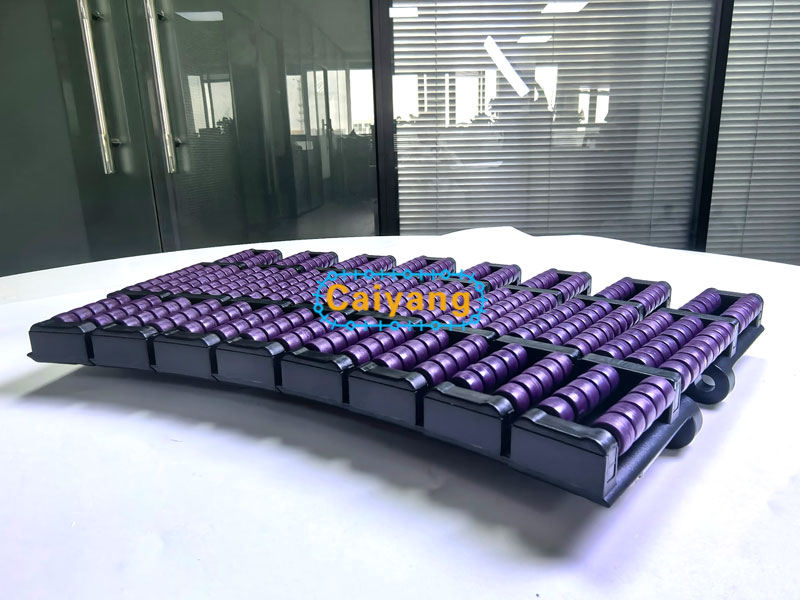
The main materials used in conveyor belt manufacturing include rubber, plastics, and fabrics. Among these, rubber conveyor belts are the most commonly used material due to their excellent wear resistance, oil resistance, water resistance, and cold resistance. When selecting materials, factors such as the operating environment, transported materials, and working conditions must be considered to ensure that the conveyor belt has sufficient strength, wear resistance, and service life.
III. Structural Design
The structural design of the conveyor belt is a crucial aspect of the manufacturing process, directly affecting its performance and service life. The structural design mainly includes the core layer, cover layer, and wear-resistant layer. The core layer is the main load-bearing component of the conveyor belt, typically reinforced with fabric or steel wire rope. The cover layer protects the core layer, preventing material wear. The wear-resistant layer improves the belt’s abrasion resistance and extends its service life.
IV. Manufacturing Process
The conveyor belt manufacturing process mainly includes rubber mixing, calendering, vulcanization, and molding. Rubber mixing involves uniformly mixing rubber with various additives to form a rubber compound with specific properties. Calendering involves pressing the rubber compound and reinforcing materials together into a belt of a certain thickness. Vulcanization uses heat and pressure to tightly bond the rubber and reinforcing materials, forming a conveyor belt with sufficient strength and abrasion resistance. Molding involves cutting the vulcanized conveyor belt to the required dimensions and performing necessary trimming and inspection.
V. Quality Control
Quality control is a crucial aspect of the conveyor belt manufacturing process, directly impacting product quality and performance. Quality control mainly includes raw material inspection, production process monitoring, and finished product inspection. Raw material inspection must ensure that the materials used meet relevant standards and requirements; production process monitoring must strictly control each production link to ensure the stability and controllability of the production process; finished product inspection must conduct comprehensive performance testing and quality evaluation on the produced conveyor belts to ensure that the product quality meets relevant standards and customer requirements.
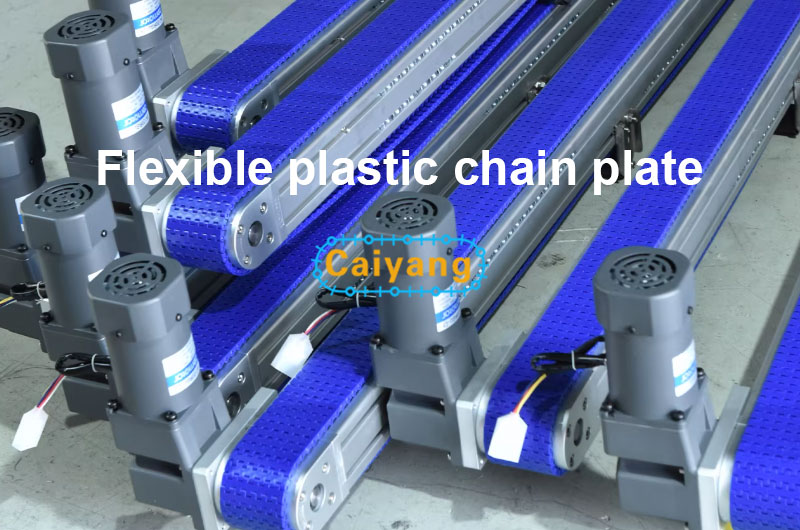
How are conveyor chains categorized?
Plastic chain conveyor lines typically use a combination of chain plates and chains. The chain is the core of the transmission, and common models are as follows:
Flat-top chain – The most common basic model. The flat surface ensures smooth conveying, suitable for regular materials such as bottles, cans, and cartons. Standard widths include 63.5, 76.2, 82.6, 95.3, 114.3, 152.4, 190.5, and 304.8 mm, and non-standard widths can also be customized.
Modular mesh belt – Perforated and breathable model. The perforated surface allows for air and water permeability. Suitable for conveying scenarios requiring cooling, drainage, and cleaning – seafood processing, fruit and vegetable sorting, slaughtering lines, and washing lines. Easy to rinse, preventing water and residue accumulation.
Curved chain – Space-saving for curved routes. The chain plates themselves can bend and curve, suitable for compact production line layouts. Saves space and cost compared to adding a turning frame.
Side-bending chain – a chain specifically designed for turning. Used with turning chain plates, it features hinged structures on both sides, enabling curved conveying in a horizontal plane. Minimum turning radius is standardized; when selecting, ensure the turning radius is greater than or equal to the minimum turning radius of the chain plate.
Ball chain – with built-in wheels for stronger load-bearing capacity. The chain plate surface or bottom features ball bearings, resulting in low friction resistance, suitable for heavy-duty or long-distance conveying, and placing less load on the drive motor.
https://caiyangbelt.com/conveyor-belt-manufacturers-in-china/