
Modular plastic chain plate supplier
2026 Asia International Logistics Technology and Transportation System Exhibition
The CeMAT ASIA 2026, jointly hosted by the China Federation of Logistics and Purchasing, the China Mechanical Engineering Society, Deutsche Messe AG, and Hannover Milano Fairs Shanghai Ltd., is a national-level, international, and professional logistics industry exhibition. As a core component of the CeMAT Shanghai Industrial Exhibition, it inherits the top exhibition concept and resource advantages of the global CeMAT exhibition in Germany. Based in China, it radiates across the Asia-Pacific region and connects the world. It serves as a core window for the global logistics technology industry chain to penetrate the Asian market and as an important bridge for domestic logistics enterprises to step onto the international stage.
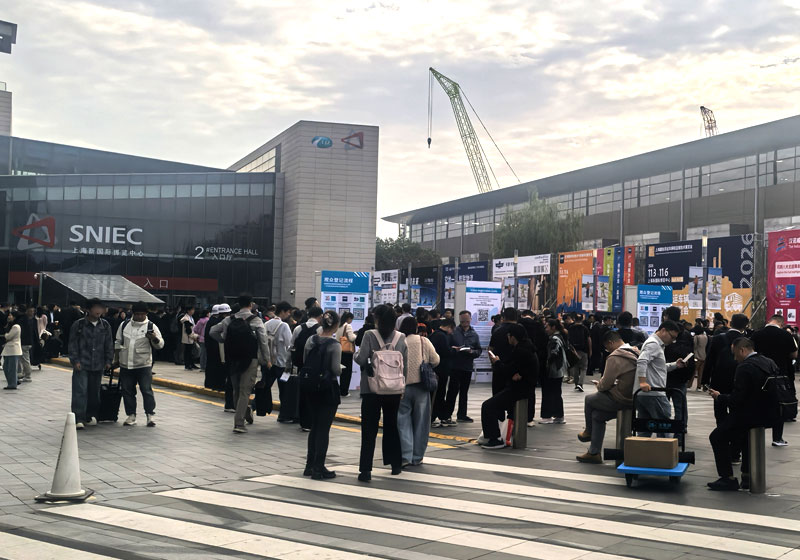
Refined exhibition area layout: full industry chain coverage, scenario-based precise display
To accommodate the demands of the industry’s refined development, enhance the efficiency of visitor experience, and improve the precision of supply and demand matching, CeMAT ASIA 2026 will continue its professional, scenario-based, and segmented exhibition layout approach. It will systematically divide multiple exhibition halls at the Shanghai New International Expo Center. The seven core exhibition areas will each perform their respective functions and complement each other, comprehensively covering the core links of the entire logistics industry chain, and providing a “one-stop” exhibition experience showcasing the world’s leading logistics technologies and equipment. The detailed layout and core exhibition content of each hall are as follows:
(I) Logistics System Integration and Solutions Exhibition Area
As the core flagship exhibition area of this exhibition, Hall W1 focuses on the top-level design and overall solutions for smart logistics, highlighting “system integration, one-stop empowerment, and full-chain upgrade”. It brings together the world’s top logistics system integrators and solution service providers. The core exhibition content covers core products and technologies such as intelligent warehousing overall solutions, automated storage and retrieval systems (AS/RS), intelligent sorting and warehousing integrated systems, flexible supply chain management systems, intelligent logistics plant planning for factories, dedicated solutions for e-commerce warehousing, intelligent warehousing and distribution systems for manufacturing, digital warehousing management platforms (WMS), and transportation management systems (TMS).
This exhibition area brings together leading domestic and international enterprises such as KION Group, Dematic, Dafu, Swisslog, SFI, Beizhi Technology, Beiqi Institute, Kunqian Intelligent, Today International, Cainiao, Kailaoshi, and Lanjian Intelligent, focusing on showcasing customized intelligent logistics solutions that are suitable for different industries and scenarios. Compared to the display of single equipment, the core of this exhibition area highlights the advantages of “integration, digitalization, and scenario-based”, breaking the pain points of fragmented application of traditional logistics equipment, and providing large manufacturing enterprises, e-commerce platforms, logistics parks, and warehousing enterprises with a full-process one-stop service from scheme design, equipment construction, system debugging to operation and maintenance upgrades. It is a core reference exhibition area for enterprises’ transformation and upgrading, as well as intelligent warehouse transformation.
(II) Logistics Robots and AGV/AMR Exhibition Area
Hall W2 is one of the core exhibition areas with the most technological flair at this exhibition, focusing on core equipment for logistics automation and flexibility. It showcases a wide range of intelligent logistics robots, autonomous mobile devices, and core control technologies. Core exhibits include AGV (Automated Guided Vehicle), AMR (Autonomous Mobile Robot), warehouse handling robots, sorting robots, palletizing robots, collaborative robots, flexible conveyor robots, as well as core supporting technologies such as robot navigation and positioning systems, intelligent scheduling systems, multi-robot collaborative operation systems, and autonomous obstacle avoidance technology.
As the demand for flexible logistics continues to surge, the traditional fixed assembly line operation model has become unable to accommodate the warehousing operation needs of multiple categories, small batches, and high frequencies. AMR robots, which have the advantages of flexible deployment, autonomous adaptation, and no need for manual intervention, have become the core trend of industry upgrading. This exhibition area has undergone a comprehensive expansion, gathering industry benchmark enterprises such as KUKA, ABB, Fanuc, Hikrobot, KuaiCang, JZ Robotics, Haro Innovation, Standard, and Jiazhi Technology, with a large number of new products debuting. A dynamic demonstration area has been set up on site to authentically reproduce complex scenarios such as e-commerce sorting, factory material handling, warehouse goods turnover, and cold chain logistics transfer. It visually demonstrates the core performance of robots in autonomous navigation, intelligent obstacle avoidance, collaborative operation, and precise docking, fully presenting the application advantages of logistics robots in high flexibility, high efficiency, and high adaptability.
(III) Exhibition area for conveyor sorting equipment and accessories
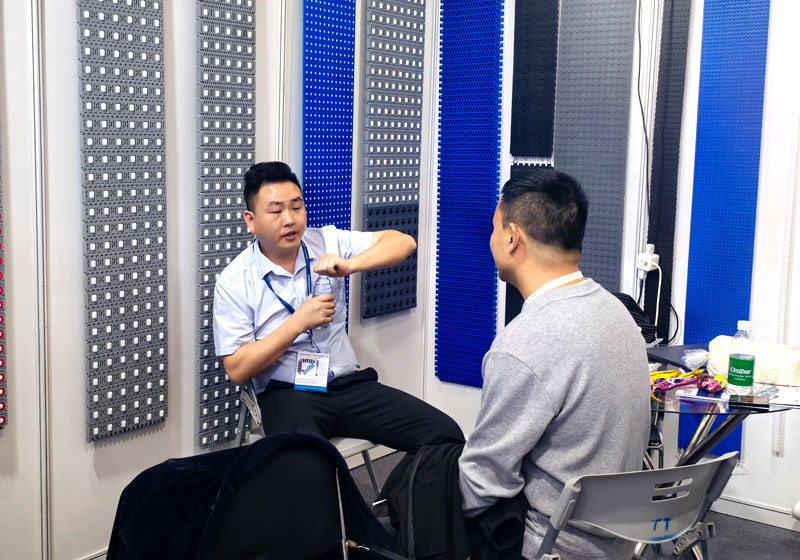
Conveyor sorting is the core component of logistics warehousing operations, directly determining the overall efficiency of logistics operations. Hall W3 focuses on core logistics equipment, specifically showcasing efficient, intelligent, and precise core equipment and supporting accessories for conveyor sorting. The core exhibits include high-speed crossbelt sorters, slide-block sorters, swing-arm sorters, intelligent dynamic conveyor lines, roller conveyor equipment, chain conveyor equipment, vertical lifting conveyor equipment, intelligent diverging and merging systems, as well as various specialized accessories, control systems, detection and identification equipment for conveyor sorting equipment.
This exhibition area gathers leading enterprises from industries such as Interroll, Interroll, Jinfengfu, Demag Industries, Xinba Technology, and South China Xinhai. The exhibits comprehensively cover the sorting and conveying needs of all categories, ranging from light express delivery and parcel materials to heavy industrial materials. Addressing the pain points of traditional sorting equipment, such as high error rates, slow speeds, poor adaptability, and high dependence on manual labor, this exhibition focuses on showcasing a new generation of high-speed intelligent sorting equipment. Equipped with machine vision recognition, intelligent scanning and positioning, and automatic error correction systems, it achieves automatic cargo identification, precise sorting, and rapid conveying. The sorting accuracy rate can reach 99.99%, with a daily sorting efficiency exceeding one million items. It is widely suitable for high-frequency circulation scenarios such as e-commerce logistics, express delivery, manufacturing, and pharmaceutical distribution, providing core hardware support for logistics cost reduction and efficiency improvement.
- Exhibition area for forklifts, accessories, and lifting equipment
Hall W4 focuses on core terminal equipment for material handling, covering two major categories: forklifts and lifting equipment. It is the core exhibition area in the field of industrial logistics and handling. The forklift section highlights a full range of forklift equipment, including new energy electric forklifts, intelligent unmanned forklifts, narrow aisle warehouse forklifts, heavy-duty industrial forklifts, explosion-proof forklifts, and reach trucks, as well as a complete set of supporting accessories such as forklift batteries, motors, controllers, attachments, and tires. The lifting equipment section displays light lifting equipment, cranes, lifting platforms, boarding bridges, loading and unloading platforms, industrial doors, continuous material handling equipment, and various lifting accessories.
Driven by the dual policies of carbon peaking and neutrality, as well as intelligent upgrades, new energy and intelligence have become the core development trends in the forklift industry. This exhibition area will feature prominent enterprises such as Hangcha, Heli, BYD, Linde, Sany Heavy Industry, Noli, Jungheinrich, and Toyota, showcasing zero-emission and low-energy consumption new energy forklifts, as well as unmanned forklifts equipped with autonomous navigation, automatic loading and unloading, and intelligent scheduling functions. Compared to traditional fuel forklifts, the new generation of new energy intelligent forklifts have advantages such as low energy consumption, low noise, zero pollution, convenient operation, and wide application scenarios. They can achieve unmanned handling operations in multiple scenarios such as warehousing, factory areas, and docks, significantly reducing labor costs and operation and maintenance costs, and facilitating the green and intelligent upgrade of industrial logistics. The lifting equipment section will focus on lightweight, intelligent, and safe upgrades, showcasing efficient and safe lifting equipment suitable for industrial production, warehousing, and loading and unloading.
(V) Packaging equipment and unitized logistics equipment exhibition area
Unitization, standardization, and greenification are important foundations for the development of modern logistics. Hall W5 focuses on logistics end-of-line packaging and unitized storage and transfer equipment, with core exhibits including automated packaging equipment, intelligent packing equipment, labeling equipment, integrated weighing and packaging equipment, as well as intelligent pallets, recyclable turnover boxes, folding logistics boxes, storage bins, containers, casters, logistics protective equipment, and other unitized logistics tools.
The current logistics industry is vigorously promoting plastic reduction in packaging, recycling, and standardized upgrades, bidding farewell to the industry chaos of traditional disposable packaging and disorderly piling of non-standard equipment. This exhibition area highlights three core highlights: green recycling, intelligent efficiency, and unified standards. Several companies have launched recyclable smart turnover boxes, degradable packaging materials, and automated energy-saving packaging equipment. Among them, smart pallets equipped with IoT positioning chips can achieve full traceability, location tracking, and inventory monitoring of goods, solving pain points such as traditional pallet loss, management confusion, and inefficient inventory checking. Automated packaging equipment can achieve automatic weighing, automatic sealing, automatic labeling, and intelligent packing, adapting to multi-size cargo packaging needs, greatly improving packaging efficiency, reducing packaging consumable loss, and helping the logistics industry achieve green and low-carbon transformation and standardized upgrades.
(VII) Innovative Technology and Comprehensive Exhibition Area
Hall E3 is the cutting-edge innovation core exhibition area of this exhibition, highlighting “future technology, cutting-edge applications, and cross-industry integration”. It focuses on the future development direction of the logistics industry and showcases disruptive innovative technologies and cross-industry application products that have not yet been widely adopted. The core exhibition content includes industrial-grade unmanned freight transportation technology, digital twin logistics system, AI intelligent supply chain scheduling platform, low-carbon energy-saving logistics technology, overall solution for smart parks, intelligent system for cross-border logistics, temperature control and traceability technology for cold chain logistics, as well as gathering innovative achievements from overseas special exhibition groups and scientific and technological innovation enterprises in specific fields.
As the most forward-looking exhibition area, Hall E3 highlights the new forms of cross-industry integration in the logistics sector, focusing on the deep integration of artificial intelligence, big data, the Internet of Things, new energy, and the logistics industry. The digital twin logistics system enables virtual simulation of warehouse scenarios, real-time monitoring of equipment operation, simulation and optimization of operational processes, and early warning of faults. Industrial-grade autonomous driving technology is suitable for unmanned transportation in enclosed scenarios such as parks, ports, and factory areas, achieving fully automated logistics transportation operations. Low-carbon logistics technology reduces energy consumption in logistics operations through energy-saving equipment, intelligent scheduling algorithms, and waste heat recovery systems, helping the industry achieve its dual carbon goals. This exhibition area serves as a core window for gaining insight into future logistics trends and positioning in cutting-edge fields.
CeMAT ASIA 2026 closely follows the current industrial development trends and future technological iteration directions, showcasing the four core technological trends of the logistics industry for the year. It comprehensively demonstrates the industry’s advanced transformation from “automation popularization” to “intelligent deep implementation, comprehensive green upgrade, digital full-domain integration, and flexible scenario adaptation”, providing benchmark references for technological upgrades across the entire industry.
(1) AI empowers logistics comprehensively, ushering it into an era of intelligent autonomy
Artificial intelligence (AI) is no longer a conceptual technology in the logistics industry, but a core productive force that has been fully implemented, deeply penetrated, and applied on a large scale. The biggest technological highlight of this exhibition is the deep empowerment and full-scale implementation of AI technology across all logistics scenarios. From the perspective of equipment, logistics robots, unmanned forklifts, and sorting equipment are equipped with AI algorithms, enabling autonomous learning, scene adaptation, fault self-diagnosis, and path self-optimization. Without manual preset programs, they can adapt to complex and changing warehouse operation scenarios, greatly enhancing the flexibility of equipment operation capabilities.
From the system perspective, AI intelligent scheduling systems and intelligent supply chain management systems can automatically match resources across the entire process of warehousing, sorting, transportation, and distribution based on big data analysis. They dynamically optimize operational paths, allocate equipment capacity reasonably, accurately predict inventory needs, and proactively avoid logistics congestion and capacity shortages, completely solving problems such as strong dependence on human experience, resource waste, and low efficiency in traditional logistics scheduling. At the same time, AI visual inspection technology has been fully upgraded, enabling not only cargo identification and scanning sorting but also packaging defect detection, cargo damage screening, and identification of potential safety hazards in warehousing. This achieves dual improvements in logistics operation efficiency and quality, driving the logistics industry to fully transition from “automated operations” to “intelligent autonomous operations”.
(II) Implementing green and low-carbon practices, and adhering to the dual-carbon development concept across the entire value chain
Amidst the deepening advancement of China’s dual-carbon strategy, green logistics has evolved from being an industry development trend to becoming a core competitiveness and a rigid development requirement for enterprises. CeMAT ASIA 2026 will take green and low-carbon as its core exhibition theme, integrating the green development concepts of energy conservation, emission reduction, circularity, and efficiency throughout the entire exhibition area, presenting a comprehensive low-carbon solution for the entire logistics chain.
At the equipment level, new energy logistics equipment has been widely adopted, with lithium-ion forklifts, hydrogen forklifts, electric handling equipment, and energy-saving conveyor equipment becoming mainstream. Compared to traditional fuel-powered and high-energy-consumption equipment, these new devices reduce energy consumption by over 30%, emit zero exhaust gas, produce low noise, and meet the green production requirements of various warehouse areas. At the appliance level, recyclable turnover boxes, smart reusable pallets, and degradable packaging materials have fully replaced traditional disposable consumables, enabling the circular use of logistics packaging and significantly reducing resource depletion and solid waste emissions. At the system level, smart energy consumption management systems and energy-saving scheduling algorithms optimize equipment operation duration, avoid ineffective energy consumption, and achieve precise energy consumption control through digital technology. This exhibition aims to create a comprehensive green logistics implementation model for the entire industry chain through comprehensive green upgrades in equipment, appliances, systems, and scenarios, thereby assisting the industry in achieving a low-carbon transformation.
(III) Ensure digital connectivity across the entire domain to build an integrated smart supply chain system
The traditional logistics industry has long faced issues such as data fragmentation, information silos, and process disconnection. Data from various links including warehousing, sorting, transportation, inventory, and orders cannot be interconnected, leading to delayed supply chain response, inefficient resource allocation, and difficulties in traceability management. This exhibition focuses on showcasing digital and integrated supply chain solutions, relying on Internet of Things (IoT), big data, digital twins, and cloud computing technologies to break down data barriers throughout the entire logistics process.
Various intelligent logistics systems can achieve real-time data collection, synchronous updating, and intelligent analysis throughout the entire process of orders, inventory, warehousing, operations, transportation, and after-sales services. Enterprises can grasp the status of warehouse inventory, equipment operating conditions, cargo circulation trajectory, and order execution progress in real time through a visual management platform, realizing the visualization, traceability, controllability, and predictability of the entire supply chain. At the same time, digital twin technology achieves a 1:1 virtual replication of warehouse scenarios, which can simulate various operation processes, predict equipment failures, optimize spatial layout, avoid operational risks in advance, greatly enhance supply chain resilience and operational efficiency, and assist enterprises in building an efficient, intelligent, and secure modern smart supply chain system.
(4) Flexible adaptation and upgrading to meet customized logistics needs across multiple scenarios
With the continuous innovation in terminal industry formats, fragmented, customized, and high-frequency logistics demands have become the norm. Traditional logistics equipment, which is fixed and assembly-line-style, has become unable to adapt to market changes. This exhibition focuses on showcasing flexible, modular, and rapidly iterable new logistics equipment and solutions, making it a core highlight of the industry’s technological upgrading.
New types of equipment such as flexible AMR robots, modular conveyor sorting lines, quickly dismountable storage racks, and adaptive packaging equipment, require no large-scale site modification, fixed installation, or debugging. They can be quickly adapted, flexibly deployed, and freely combined according to order fluctuations, scene changes, and capacity adjustments. These solutions perfectly meet the logistics needs of emerging scenarios such as e-commerce live streaming, instant retail, flexible manufacturing, and niche customization. Compared to traditional rigid logistics systems, flexible logistics solutions offer advantages such as low investment costs, fast iteration speed, wide range of adaptable scenarios, and high flexibility in adjustments. They have become the preferred solution for small and medium-sized logistics enterprises and new manufacturing enterprises undergoing transformation and upgrading, and are also the core mainstream direction for the development of logistics equipment in the future.
CeMAT ASIA 2026 is not only an annual technological extravaganza, but also an excellent opportunity to gain insights into trends, connect resources, overcome bottlenecks, and achieve transformation and upgrading. At this grand event that gathers global wisdom and leads industrial transformation, all industry participants will jointly explore innovative paths for smart logistics, share the dividends of industrial upgrading, and jointly build a new ecosystem of green and intelligent supply chains.