Modular plastic chain plate supplier
What Is Top Chain? A Complete Guide to Plastic Top Chain Conveyors
When designing production and packaging lines for food, beverage, pharmaceutical and household chemical industries, conveyor selection directly affects line stability, hygiene level and maintenance cost. Plastic top chain, also known as flat top chain, is one of the most widely used conveyor media for straight-running and curved conveying systems.
This complete guide will explain what top chain is, its core structure, material options, main advantages, typical applications and key selection tips to help engineers and procurement staff make proper decisions.
What is Plastic Top Chain?
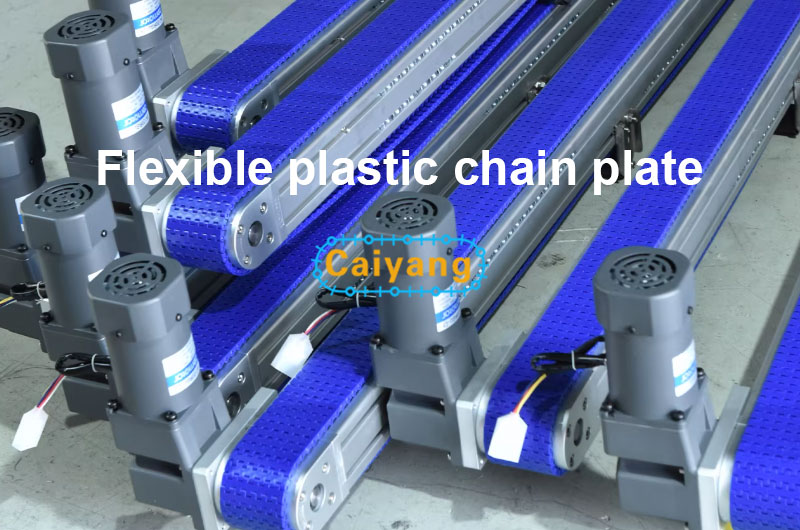
Plastic top chain is a kind of modular conveyor chain made of engineering plastic. Each chain module connects together by hinge pins to form a continuous flat conveying surface. It is often called flat top chain for its smooth, solid top surface. Different from mesh modular belts with holes, top chain has nearly no gaps on the carrying surface. It can run on straight sections as well as tight-radius bends, which makes it ideal for stable transportation of bottles, cans, containers and packaged products.
Core Structure of Top Chain
- Chain Modules: Interlocking plastic segments. The flat upper face supports products. Custom cleats, side guards can be installed as required.
- Hinge Pins: Connect adjacent modules, allow the chain to flex and turn. Pins can be disassembled quickly for replacement or shortening the chain length.
- Sprockets: Drive wheels with teeth matching the chain pitch, transfer power to pull the top chain running.
- Support Rails: Guide the chain and reduce friction during operation, especially for curved sections.
Common Materials for Plastic Top Chain
- PP (Polypropylene): Good corrosion resistance, suitable for wet environment and frequent CIP cleaning. Low temperature tolerance is limited.
- POM (Polyoxymethylene / Acetal): High rigidity, low friction, excellent wear resistance. It is the most popular material for top chain. Works well in normal and slightly low-temperature workshops.
- PE (Polyethylene): Outstanding impact resistance, used for heavy-load or high-abrasion scenarios.
Key Benefits of Plastic Top Chain Conveyors
- Stable flat surface: Suitable for transporting round containers like PET preforms, glass bottles and cans, less tipping risk.
- Curved conveying available: Can run small-radius turns, save factory floor space and simplify layout design.
- Easy maintenance: Damaged single module can be replaced separately, no need to change the whole chain. Less downtime.
- Great hygienic performance: Smooth non-porous surface, simple to wash and sanitize, fit for food and beverage CIP sanitation.
- Light weight & low noise: Lighter than stainless steel chain, runs quietly with lower energy consumption.
- Customizable: Cleats, side skirts, different widths and colors can be customized according to production demands.
Typical Industry Applications
- Beverage & Bottle production: PET preforms, plastic bottles, glass bottles, canned drinks conveying.
- Food processing: Packaged meat, baked goods, packaged snacks after packaging.
- Daily chemical industry: Detergent bottles, cosmetic containers.
- Pharmaceutical industry: Medicine bottles and sealed packages, strict hygiene requirements.
- Packaging line: Cartons and finished packaged goods sorting and transfer.
Important Selection Tips
- Confirm working temperature: POM is not fit for high heat environment. For freezing or thawing lines, choose suitable low-temperature grade plastic.
- Check product weight: Heavy products need reinforced top chain structure to avoid deformation.
- Cleaning method: If you adopt CIP online cleaning, select material resistant to cleaning chemicals.
- Line layout: For curved conveyor, confirm bending radius to avoid chain jamming.
- Add accessories: Install cleats or side skirts when inclined conveying to prevent product sliding.
Common Limitations
Plastic top chain is not recommended under these conditions:
- Continuous high temperature over the material limit
- Sharp heavy objects that may scratch or crack plastic panels
- Strong solvent environment which can erode plastic material