
Modular plastic chain plate supplier
What is a Plastic Cable Drag Chain? (Benefits, Uses, and Installation Guide)
1.What is a Plastic Cable Drag Chain?
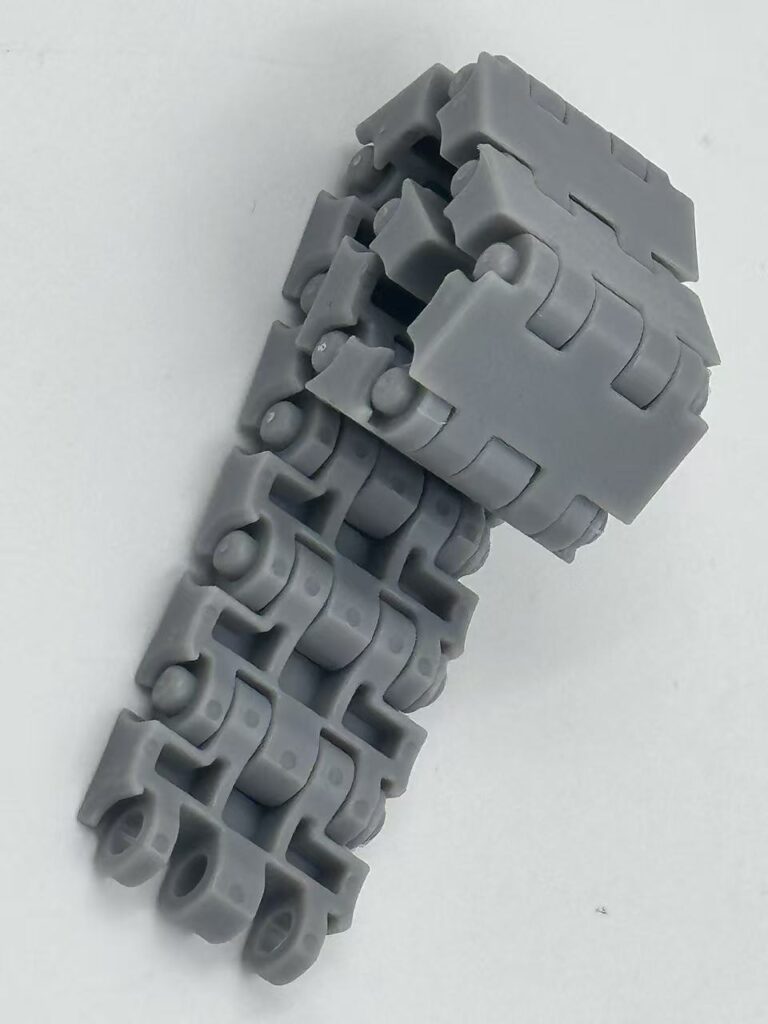
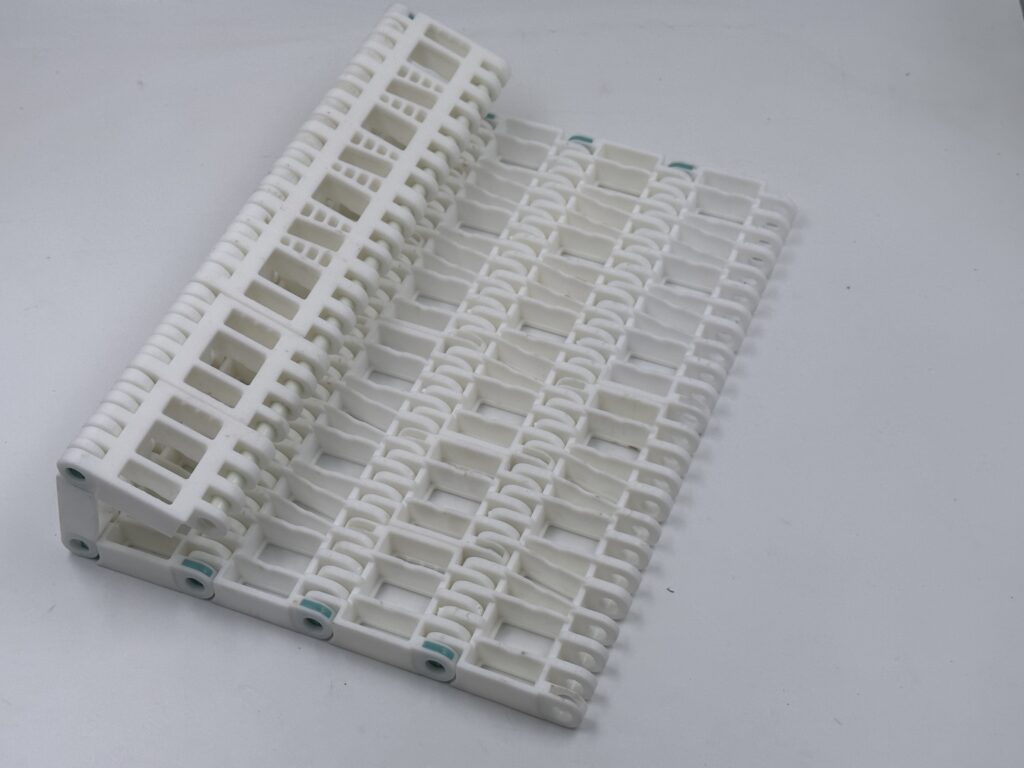
A plastic cable drag chain, also known as an energy chain or cable carrier, is a modular, flexible protective mechanical component designed for reciprocating motion equipment. It consists of continuous interlocking plastic links that can bend and extend freely. It is widely used to organize, guide and protect moving cables, wires, air hoses and oil pipes, preventing tension, twisting, abrasion and tangling during mechanical operation. It is the most common cable protection solution for modern automated machinery.
2. Key Components and Materials of Plastic Cable Drag Chains
Standard plastic drag chains adopt a modular assembly structure with simple and durable core components. The main materials are high-performance engineering plastics.
- Core Components
Chain links, upper and lower cover plates, connecting pins, internal separation baffles, fixed and movable mounting brackets. Each part is detachable for easy replacement and wiring.
- Main Materials
Most plastic drag chains are made of reinforced PA66 nylon. Some upgraded versions adopt flame-retardant, anti-static and high-temperature modified nylon. The material features high toughness, impact resistance, wear resistance and anti-aging properties.
3. Benefits of Using Plastic Cable Drag Chains in Various Industries
Plastic drag chains have become the mainstream choice for industrial cable protection due to their comprehensive performance advantages.
- Lightweight & Energy-saving: 60%–80% lighter than metal chains, reducing equipment load and operating energy consumption.
- Corrosion & Wear Resistance: Resistant to oil, water, dust and weak chemicals, no rust or deformation.
- Low Noise & Smooth Movement: No rigid metal collision, ensuring quiet and stable operation.
- Easy Installation & Low Maintenance: Modular open design, no lubrication required, low later maintenance cost.
- Neat Wiring & Anti-interference: Internal partition design avoids cable tangling and signal interference.
4. Common Applications for Plastic Cable Drag Chains
Plastic cable drag chains are widely applied in medium and light-duty automated equipment with frequent reciprocating motion.
- CNC & Processing Machinery: Laser cutters, engraving machines, lathes and milling machines.
- Automation Production Lines: Robotic arms, packaging machines, assembly and conveying equipment.
- Electronic & Precision Equipment: Semiconductor equipment, 3C automation and testing instruments.
- Logistics & Warehousing Equipment: Automated stackers, handling robots and warehouse conveying systems.
- Light Industry & Medical Machinery: Printing, textile and clean-type medical equipment.
5. Installation Guide for Plastic Cable Drag Chains: Step-by-Step
Standard installation ensures stable operation and long service life.
- Model Selection: Confirm equipment stroke, moving speed and cable quantity. Select appropriate inner width, inner height and minimum bending radius, reserve 10%–20% spare space inside the chain.
- Bracket Fixing: Install fixed end and movable end brackets horizontally and align them accurately, fasten all bolts firmly.
- Cable Layout: Open the drag chain cover, place cables and pipes separately with baffles, keep pipelines relaxed without tension or crossing.
- Closing & Fixing: Buckle and lock the upper cover to prevent loosening during movement.
- Full-stroke Trial Run: Manually test full reciprocating stroke, check for jamming, abnormal noise and cable extrusion, adjust before formal use.
6. Maintenance Tips for Plastic Cable Drag Chains
Plastic drag chains are nearly maintenance-free, but simple daily care can greatly extend service life.
- Regularly clean dust, debris and oil dirt inside the drag chain to reduce friction.
- Check chain link tightness and locking condition periodically, replace worn or cracked links in time.
- Avoid overloading and excessive wiring to prevent deformation and jamming.
- Keep the moving track clean to avoid foreign matter blocking operation.
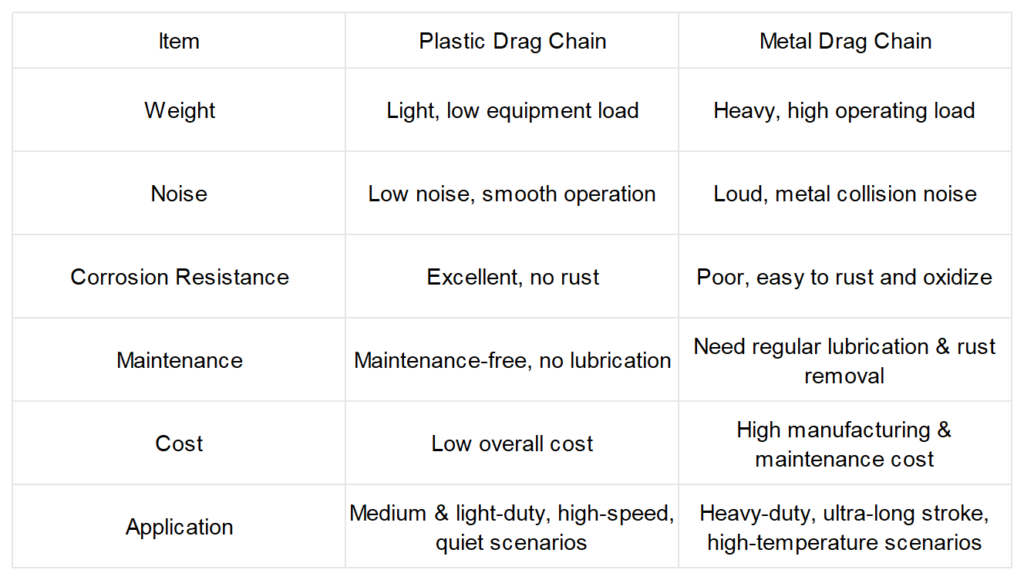
7. Comparative Analysis: Plastic vs. Metal Cable Drag Chains
Plastic and metal drag chains apply to different working conditions. The detailed comparison is as follows.
8. FAQs
Q1: Are plastic cable drag chains durable?
A1: Yes. High-quality reinforced nylon drag chains have excellent anti-aging and wear resistance, and can run stably for millions of reciprocating cycles under normal working conditions.
Q2: Can plastic drag chains work in high-temperature environments?
A2: Standard nylon drag chains adapt to -20℃ to +80℃. Modified high-temperature resistant models can support higher temperature scenarios.
Q3: How to choose the right drag chain size?
A3: Calculate the total outer diameter of all cables, reserve 10%–20% margin, and match the bending radius according to the equipment stroke and moving speed.
Q4: Do plastic drag chains need lubrication?
A4: No lubrication is required, which is one of its biggest advantages over metal drag chains.
9. Conclusion
Plastic cable drag chains are essential cable protection components for modern industrial automation. With lightweight design, low noise, excellent corrosion resistance and zero daily maintenance, they effectively protect dynamic cables and pipelines, reduce equipment failure rates and lower operational costs. Compared with traditional metal drag chains, plastic drag chains have higher cost performance and wider applicability in most light and medium industrial scenarios. Reasonable selection, standardized installation and regular simple inspection can maximize equipment stability and service life.