
Modular plastic chain plate supplier
Specifications & Models of Plastic Slat Chain – Complete Guide
Plastic slat chains, also known as tabletop chains, are the most widely used conveyor accessories for food, beverage, packaging and industrial conveying lines. Different series and specifications correspond to different load capacity, running speed, bending radius and working environmrnts. Understanding the standar models and technical parameters helps customers select the correct plastic slat chain for their production lines.
1.Main Material Specifications
Plastic slat chains are mainly made of two industrial-grade materials: POM and PP, with stainless steel 304 pins as standard accessories.
POM Material: High hardness, excellent wear resistance and self-lubricating property. It is suitable for high-speed, continuous and heavy-load conveying lines. It features low friction, stable operation and long service life,which is the mainstream material for tabletop chains.
PP Material: Outstanding acid and alkali resistance, corrosion resistance and hydrolysis resistance. It is widely used in cleaning lines, aquatic processing, cold chain and humid working conditions where frequent water washing is required.
2.Standard Pitch & Basic Structure
Most industrial plastic slat chains adopt a 38.1mm(1.5 inch) stndard pitch, which is the universal international standard size. The modular splicing structure enables free width combination, easy installation and partial replacement. Standard chain thickness is 4mm-5mm, ensuring structural rigidity and impact resistance during long-term operation.
3.Common Mainstream Models & Features
Plastic slat chains are classified into straight-run and side-flexing types, covering almost all conveyor line requirements:
880 Series Flat Top Chain
This is the most classic universal model. The flat and seamless surface avoids product jamming and scratching. Widely used for bottles, cans, cartons and daily chemical product conveying. Common models include 880K325, 880K450, 880K600 and 880K759, supporting multiple customized widths.
882 Series Side Flexing Chain
Designed for curved conveyor systems. It can run smoothly on bending tracks with a small turning radius, saving factory space. It is commonly used in beverage filling lines and automated packaging rotary conveying systems.
820/821 Series Light-Duty Chain
Lightweight and low-noise type, suitable for light-load and high-precision conveying such as electronic parts, small packages and food finished products. It runs more quietly and has lower consumption.
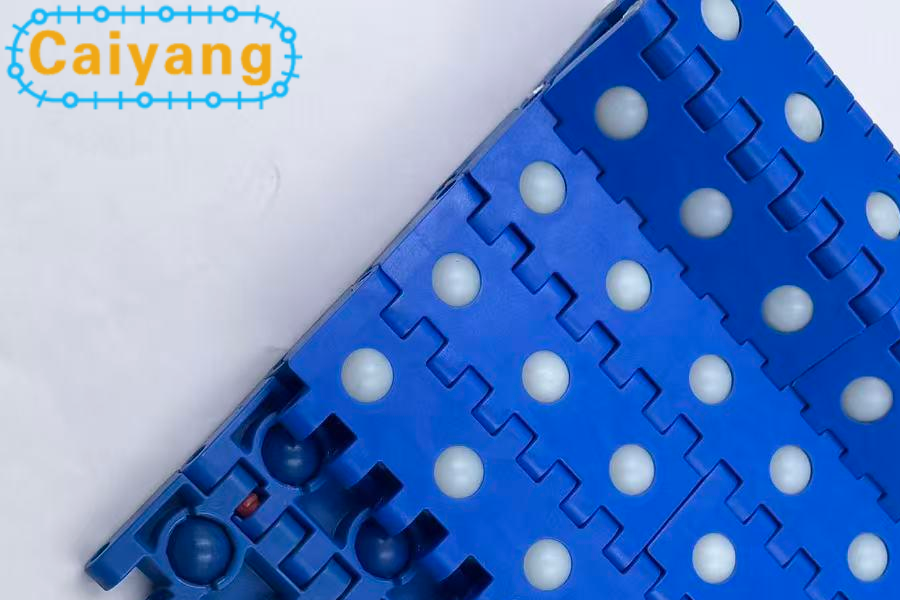
4.Core Technical Specifications
Running Performance: High tensile strength, stable load capacity up to 3800N, suitable for 24-hour continuous production.
Bending Radius: Straight chains for linear conveying; side-flex chains support 610mm-900mm turning radius for flexible line layout.
Surface Type: Flat top, ribbed top, anti-slip top and perforated types are optional, adapting to anti-slip, cooling and drainage requirements.
Certification: Food-grade raw materials meet FDA, CE and ISD standards, safe for direct food contact.
5. How to Choose the Right Model
Choose POM if your line requires high speed, heavy load, long-term continuous operation and low wear loss.
Choose PP if your working environment is humid, with frequent washing and chemical corrosion.
Choose side-flexing type for curved, rotary and diversion conveyor lines.
Choose flat top type for regular bottles,cartons and boxed goods conveying.
6.Conclusion
Plastic slat chains have copmplete standardized specifications and diversified models. With flexible material selection, stable structural performanse and low maintenance cost, they replace traditional metal chains and rubber belts in most automated production lines. Selecting the correct model and material according to actual working conditions can effectively improve production efficiency and reduce equipment failure rate.
This is Shanghai Caiyang.
If interested, feel free to contact us — Shanghai Caiyang Plastic Products Co., Ltd.
shanghaicaiyang
+86 17321328732
sales@caiyangbelt.com
https://caiyangbelt.com/