
Modular plastic chain plate supplier
Plastic vs. Stainless Steel Slat Top Chains: How Material Differences Define Their ‘Job Roles’?
When designing a food or packaging conveyor line, selecting slat top chains is more than just picking a sturdy surface. The material—plastic or stainless steel—directly decides what jobs the chain can handle, its service life, sanitation performance and total running cost. While stainless steel slat chains have their place in extreme conditions, plastic slat top chains become the preferred solution for most standard food and packaged-product conveying tasks, thanks to unique material advantages.
Stainless Steel Slat Top Chains: Strong, But With Clear Limitations
Stainless steel slat chains are famous for high mechanical strength and temperature resistance. They are widely used in high-heat, heavy-load scenarios such as high-temperature baking or heavy metal component transport.
However, stainless steel has inherent drawbacks for common food packaging lines:
- Heavy weight: Stainless steel chains add massive load to the whole conveyor frame and drive motor, raising energy consumption.
- High noise: Metal-to-metal contact creates loud clattering during operation.
- Corrosion risk: Long-term exposure to acidic or alkaline cleaning agents will cause surface rust and discoloration. Tiny pits can trap food debris, bringing sanitation risks.
- High cost: The purchase price and maintenance cost are much higher. Surface scratches also cannot be easily repaired.
- Poor friction control: Hard metal surface may cause packaged trays to slip during acceleration or deceleration.
For most food factories, stainless steel is over-specification and unnecessary unless there is ultra-high temperature or super-heavy load demand.
Plastic Slat Top Chains: Designed for Food & Packaging Conveying
Plastic slat top chains are normally made of POM or PP food-grade resin. They are engineered to match the core requirements of modern food and packaging production lines. This is where they shine.
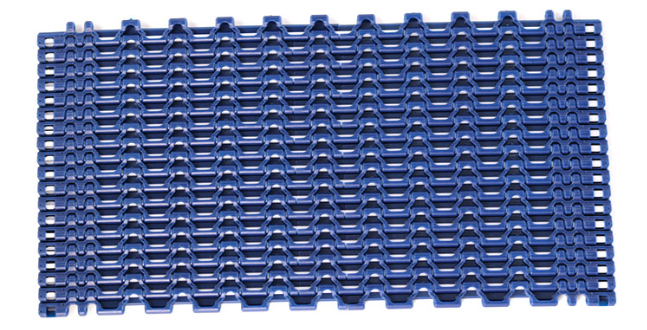
Sanitation-friendly structure for food workshops
Food-grade plastic material has smooth, non-porous surfaces. It resists absorption of grease, juice and food residues. It can go through regular CIP cleaning with hot water and approved detergents without corrosion. No rust risk. The modular design allows quick disassembly on site for deep cleaning, which greatly helps factories pass HACCP and food safety audits.
Light weight,lower power consumption
Plastic chain plates are far lighter than stainless steel equivalents.Less weight means less burden on drive motors and support frames. Factories can use smaller motors and save continuous electricity cost during long-hour production. It also reduces impact force on the whole conveyor system when starting and stopping.
Low noise and gentle product handling
Metal-on-metal impact noise disappears with plastic top chains. The smooth plastic surface delivers quiet running. It is ideal for transporting plastic food trays, packaged boxes and delicate packaged goods. It avoids scratching packaging surfaces and prevents product sliding with customized surface texture options.
Great wear resistance with self-lubrication
POM plastic slat top chains feature natural self-lubricating properties. Friction between chain and wear strips stays low, no need for frequent oil lubrication. This is critical for food lines, as oil contamination must be avoided. Stable wear performance guarantees long service life under continuous operation.
Flexible customization for complex line layout
Modular plastic slat top chains support custom width, thickness, surface pattern, side guards and baffle structures. They can be made for straight runs as well as curved layouts. Factories can adjust the design according to tray size, product weight and line space limitation. Spare parts replacement is cheap and fast; you only replace damaged individual modules instead of the whole chain.
Better overall total cost of ownership
Although the initial purchase gap is not huge, plastic chains win in long-term cost. Lower energy use, less wear, simple maintenance and cheap spare parts all cut down factory operating expenditure.
Which One Should You Choose?
- Pick stainless steel slat top chains only for extreme working conditions: continuous high temperature above 100℃, ultra-heavy metal workpieces or strong corrosive chemicals that plastic cannot withstand.
- Choose plastic slat top chains for nearly all food processing, packaged tray conveying, beverage and daily chemical packaging lines. It balances sanitation, quiet operation, product protection and cost efficiency.
Closing
Material choice defines conveyor performance. Stainless steel is the heavy-duty specialist for harsh environments, while food-grade plastic slat top chains are the practical, cost-effective mainstream solution for modern food and packaging automation.
If you are upgrading or building new conveyor lines, our customized plastic slat top chains can be tailored to match your product size, line speed and sanitation requirements. Contact us to get professional conveying advice.