
Modular plastic chain plate supplier
Plastic Sprocket Matching Guide for Slat Chain
For food, beverage, packaging and cosmetic conveyor lines, plastic slat chains are widely used for smooth, low-noise material transfer. However, many conveyor failures such as jumping teeth, abnormal wear, chain deviation and early fracture are caused by mismatched sprockets. This guide covers all core matching rules, common pitfalls and selection tips for plastic sprockets paired with slat chains.
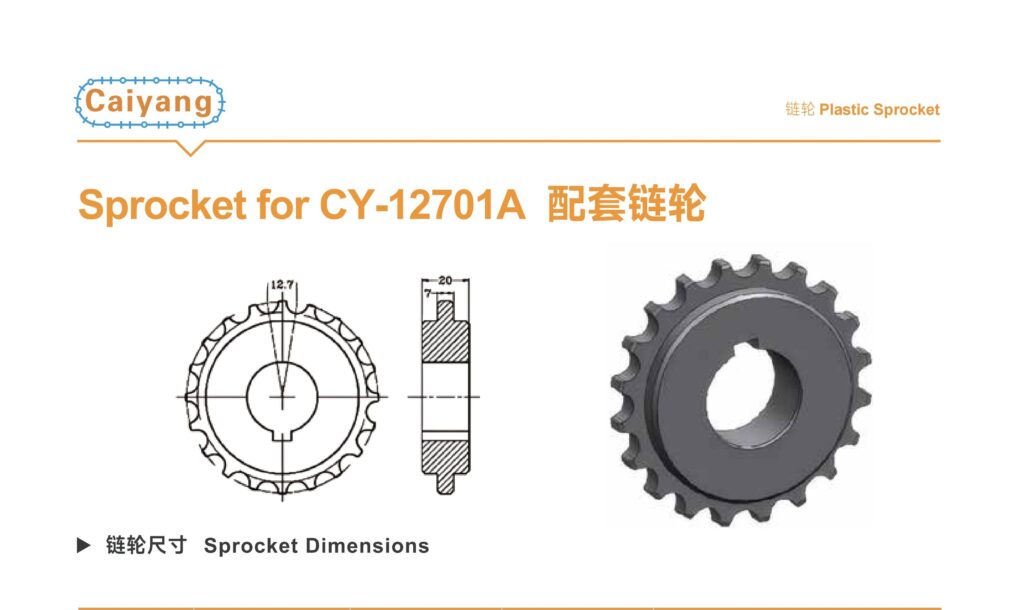
1.Pitch Matching: The Most Critical Rule
Pitch is the center distance between two adjacent hinge pins of the slat chain. The sprocket pitch must be exactly the same as the slat chain pitch.
Common standard pitches for slat chains include 12.7mm, 19.05mm, 25.4mm, 38.1mm. Even a tiny pitch deviation will lead to poor meshing.
Consequences of mismatched pitch:
- The chain will ride up on sprocket teeth, jump during operation
- Accelerated wear of hinges and tooth profile
- Unstable conveying, easy to throw bottles or packaged goods
Before ordering, confirm the chain model and pitch from your slat chain datasheet instead of measuring roughly on site.
2.Tooth Profile & Number of Teeth
The tooth profile of plastic sprockets is specially designed for slat chain hinge structure, different from roller chain sprockets. Never use general roller chain sprockets as replacements.
For tooth count selection:
- Small tooth count (Z≤17): Compact structure, high linear speed, but larger bending stress on the chain, faster wear, not suitable for long-time continuous high-speed production lines
- Medium tooth count (Z=21~25): The most widely used option for beverage and packaging conveying, balanced wear and stable operation
- Large tooth count (Z≥28): Gentle meshing, lower wear, quiet running, ideal for high-speed and long-running lines
Tip: For drive sprockets, avoid less than 17 teeth if you need stable 24/7 operation. Idler sprockets can follow the same tooth profile standard.
3.Sprocket Material Matching with Working Conditions
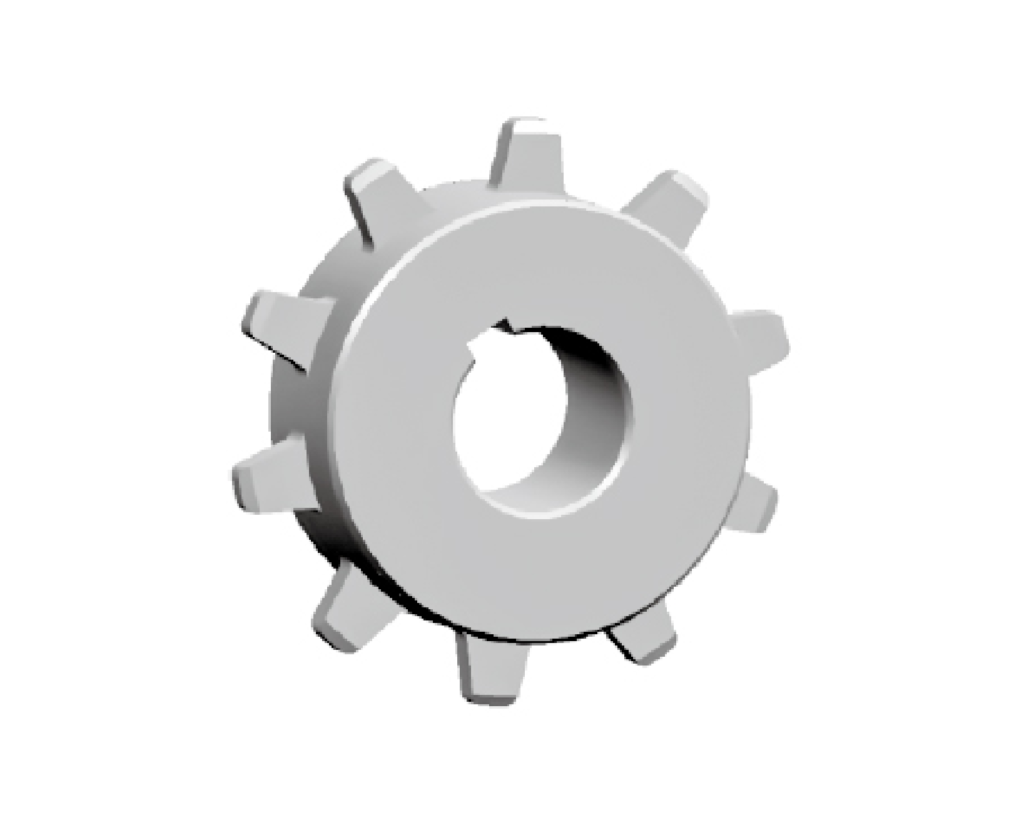
Plastic sprockets are mainly made of POM, PA (Nylon), PP, PE, and reinforced engineering plastics. Match material according to the environment of your slat chain conveyor:
- POM (Acetal): Self-lubricating, low friction, wear-resistant. Best match for POM slat chains, widely used in packaging, beverage dry conveying, high-speed lines.
- PA/Reinforced Nylon: Higher impact resistance and load capacity. Suitable for heavy-duty slat chains and lines with occasional impact.
- PP: Good chemical resistance, resistant to acid, alkaline and chlorine-containing cleaning agents. Perfect for food, seafood processing lines with frequent CIP cleaning.
- PE: Excellent low-temperature toughness, for cold storage and frozen product conveying.
Note: Do not mix materials blindly. If the chain and sprocket are different plastic materials with incompatible friction properties, static and accelerated wear will occur.
4.Bore Size, Keyway and Shaft Fit
Bore means the center hole diameter of the sprocket.
- Confirm the actual shaft diameter of drive and idle roller, choose finished bore or pilot bore for secondary machining.
- Keyway size must match the flat key on the drive shaft. Loose fit will cause slipping, oversized fit will damage the shaft and sprocket.
Split sprockets are very popular for slat chain conveyors. Split design allows installation and replacement without removing the drive motor or disassembling the whole chain, greatly reducing downtime. It is a preferred choice for beverage and packing lines.
5.Width & Side Guidance
The effective tooth width of the sprocket must adapt to the slat chain width and guide structure.
- Straight-running slat chains: Confirm the inner width of the chain and the tooth width to prevent side friction.
- Side-flex curved slat chains: Use dedicated curved sprockets. Standard straight sprockets will jam and scratch the chain when running on curved sections.
If the conveyor has side guides, reserve reasonable clearance between the sprocket edge and guide rail to avoid scraping.
6.Drive vs Idler Sprocket Matching Difference
Many users use the same sprocket for drive and idle ends, which is not always correct:
- Drive sprocket: Bears torque, higher requirement on wear resistance and impact resistance, usually POM or reinforced nylon. Tooth profile precision is strict to avoid jumping teeth.
- Idler sprocket: Mainly for tensioning and guiding. In wet and corrosive workshops, PP sprockets are acceptable for idle ends to cut cost.
Both drive and idler sprockets must keep the same pitch and tooth profile.
7.Common Matching Mistakes to Avoid
1.Match by appearance only: Two sprockets may look similar, but pitch and tooth profile are different.
2.Mix new sprockets with old worn slat chains: Worn chain hinges will not mesh well with new sprockets, causing rapid tooth damage.
3.Ignore temperature and chemical environment: Standard POM sprockets fail quickly in high-temperature or strong detergent soaking scenarios.
4.Overload: Plastic sprockets have load limits. Heavy-load conveying should consider reinforced plastic or metal sprockets.
8.Quick Matching Checklist Before Ordering
- Slat chain model & exact pitch
- Straight chain or side-flex curved chain
- Drive/idler application
- Working temperature, cleaning chemicals, food contact requirement
- Shaft diameter, bore and keyway size
- Required tooth number
- One-piece or split type
Closing
Precise sprocket matching directly decides the service life and stability of the whole slat chain conveyor system. Correct matching reduces unexpected shutdown, lowers maintenance cost and keeps your production line running continuously.
If you need customized plastic sprockets matched with your slat chain, welcome to contact us for technical support.