
Modular plastic chain plate supplier
Perforated Slat Chain: Advantages for Food Processing
For food manufacturers balancing hygiene, product protection and line efficiency, choosing the right conveyor surface is critical. Perforated slat chain sits between solid flat-top slat chain and open mesh belt:it retains the rigid,stable platform of a slat chain while adding precision punched holes for drainage, airflow and washdown. It has become a preferred conveyor component for wet, sanitary food processing environments.
What Is Perforated Slat Chain?
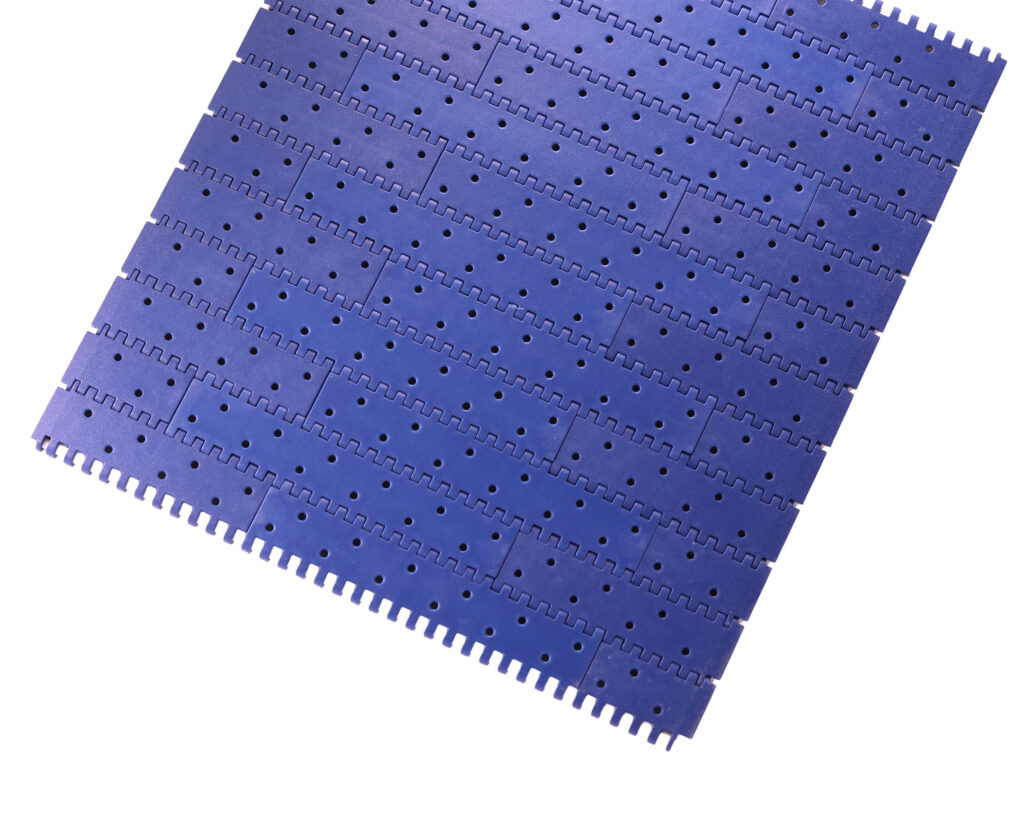
Perforated slat chain is a modular plastic conveyor chain made of interlocking slat plates with evenly arranged perforations, pinned together by hinge rods and driven by matched sprockets. It is commonly produced in food-grade PP or POM, compliant with FDA and GMP food contact standards.
Unlike fully open mesh belts, the solid plate base offers continuous support for soft or fragile food items. Unlike non-porous solid slat chains, the holes let water, sanitizer, hot air and excess liquid pass through freely. This unique combination solves many pain points in food production lines.
Core Advantages for Food Processing
1.Drainage & Ventilation Without Sacrificing Product Support
This is its biggest benefit. On vegetable washing, seafood dewatering, meat spray chilling and bakery cooling lines, rinse water, brine and surface moisture drain instantly through the perforations. Hot air circulates evenly underneath baked goods after ovens, speeding up uniform cooling.
Compared with mesh belts, the continuous plate surface prevents soft food such as cakes, tofu, fillets and fresh produce from sagging, deforming or getting caught in large mesh openings. It avoids product damage while still achieving drainage and airflow.
2.Superior Hygiene & CIP Cleaning Performance
Food-grade perforated slat chain is designed for regular washdown and Clean-in-Place (CIP) routines. The smooth non-porous plastic surface resists grease, protein buildup and bacterial growth. Sanitizing solution can flush through the holes during cleaning cycles to remove residue.
PP grades resist common food disinfectants, weak acids and alkalis used in food workshops. It will not rust like metal chain plates, eliminating metal contamination risk for food products.
3.Stable, Gentle Conveying for Fragile Food
Solid mesh belts may create uneven support;standard roller conveyors can scratch soft packaging and fresh food. Perforated slat chain runs smoothly with flat, consistent support.
It works well for whole fruits, packaged meat, pastry, canned goods and seafood. Products stay stable during accumulation, transfer and uphill conveying, with far lower breakage and deformation rate.
4.Modular Structure, Low Maintenance
It follows the same modular design as other plastic slat chains. If one slat plate is damaged or worn, you only replace the single module instead of the whole chain. This cuts spare part cost and shortens production downtime.
The chain runs quietly, with low friction and less wear on guide rails and sprockets. Matching sprockets and side guards can be customized together for your conveyor layout.
5.Wide Adaptability for Hot & Cold Food Workshops
Food-grade PP perforated slat chain handles cold environments for frozen food, seafood and cold storage lines. POM versions offer better wear resistance for medium-temperature bakery and pasteurization discharge lines.
It can be configured with cleats, side skirts and different hole patterns and open ratios according to your process requirements.
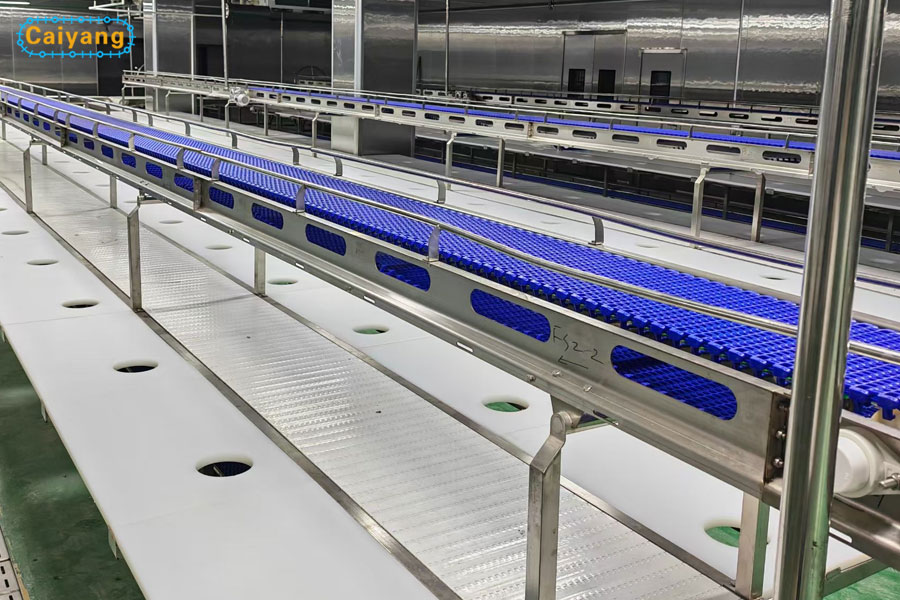
Typical Food Industry Applications
- Fruit & vegetable processing: Washing, blanching, dewatering and sorting lines
- Meat & poultry processing: Spray cleaning, chilling, bleeding and pre-packaging conveying
- Seafood production: Shrimp, fish washing, draining and freezing tunnel infeed
- Bakery & snack: Bread, cake and biscuit cooling after baking
- Ready-to-eat food, dairy and packaged food transfer after pasteurization
- Beverage can and bottle rinsing and drying sections
Perforated Slat Chain vs Solid Slat Chain vs Mesh Belt
- Solid flat slat chain: Best for dry bottle/package transfer; no drainage, not suitable for wet washing or cooling processes.
- Modular mesh belt: Great for maximum drainage and airflow, but soft products may sink or deform into mesh gaps.
- Perforated slat chain: Balanced middle option, perfect when you need both drainage/ventilation AND solid support for fragile food.
Key Selection Tips
1.Material: Choose PP for wet washing, high chemical exposure and low to medium temperature; select POM for high-speed, dry or medium-temperature cooling lines.
2.Open area: Pick hole size and open ratio based on how fast you need drainage, and whether small food fragments might fall through.
3.Sanitation: Confirm food contact certification before use for direct food contact.
4.Matching parts: Always pair with sprockets of the correct pitch and tooth profile to prevent skipping and abnormal wear.
Final Words
Perforated slat chain fills an important gap in food conveyor selection. It brings together hygiene,drainage, airflow and stable product support that single-type conveyor chains cannot easily achieve.
If you are upgrading your food processing line, Shanghai Caiyang provides custom perforated slat chains, matched sprockets and full technical support. Send us your working width, temperature, drainage requirement and product type for a tailored solution and quotation.