
Modular plastic chain plate supplier
Modular Slat Top Chains: Why “Interconnectable” Design is a Hit in Modern Production Lines?
Modern manufacturing features frequent product upgrades, flexible workshop layout adjustments, and strict requirements for low downtime. Traditional integrated conveyor belts or one-piece metal chains often lack adaptability once installed.In contrast, modular slat top chains with an interconnectable interlocking structure have become the preferred conveying solution for food,beverage, canned packaging and chemical product lines. The core advantage lies in its unique connectable module design.
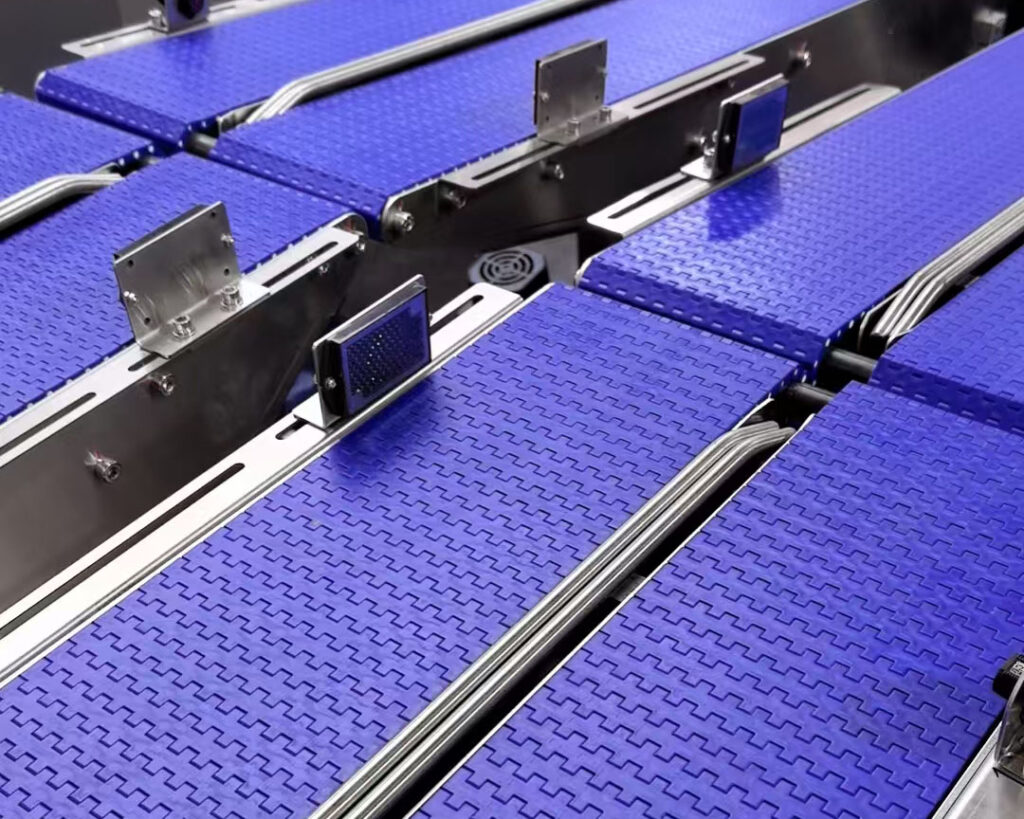
1.Flexible Layout: Assemble & Reconfigure Like Building Blocks
The interconnectable slat top chain consists of independent standard slat units locked together by hinge pins. Each module is interchangeable.
For production lines with complex paths,engineers can freely combine straight sections, curved sections and elevation sections by adding or removing modules. When factories upgrade their workshop layout or adjust product flow routes, there is no need to replace the entire conveyor chain. Users only add or take apart relevant modules to adapt to new conveying paths.
Whether for linear transport, small-radius turning or lifting transfer, this interconnected design can quickly match different line layouts, greatly cutting reconstruction time and renovation investment.
2.Minimal Maintenance: Replace Only Damaged Single Slat Instead of the Whole Chain
For traditional one-piece conveyor belts, once partial wear or cracking occurs, the whole belt must be disassembled and replaced, which leads to long production halt and high spare part cost.
Thanks to the interconnectable structure, you only need to take out the hinge pin and remove the damaged individual slat, then install a new module. No need to dismantle the full chain loop.
In 24-hour continuous production workshops, this localized repair method drastically shortens downtime. Factories only stock a small quantity of spare slats instead of complete chains, reducing inventory pressure.
3.Easy Width Adjustment to Match Changing Product Specifications
Product specifications keep updating in modern packaging lines. Bottles, cans and cartons come in multiple sizes, which requires adjustable conveyor width.
The interconnectable design supports adjusting the effective conveying width by increasing or reducing parallel slat modules. When switching from large containers to small packaging products, the chain width can be modified accordingly.
It also allows easy addition of matched side guards, baffles and other accessories on connected modules, to prevent product tipping during high-speed transport. One chain system can serve multiple product types.

4.Stable Connection & Reliable Running Under High-speed, Heavy Load
Many people worry that spliced modular chains may become loose under continuous heavy load.
The precision interlocking structure locks adjacent slats tightly. The load can be evenly distributed across connected modules during operation. The chain maintains stable pitch and flat conveying surface under long-time high-speed running. The interconnected design prevents local stress concentration and reduces risks of chain jump, disengagement or slat separation.
Made from POM or PP food-grade engineering plastic, these interconnected slat top chains also feature low friction, corrosion resistance and good sanitary performance, adapting to CIP cleaning cycles of food factories.
5.Simple Installation & Quick On-site Assembly
The interconnectable design simplifies on-site installation. Workers assemble modules section by section with standard pins, without specialized heavy tools.
For new production line projects, the chain can be delivered in segmented packages rather than a huge heavy whole loop. It is convenient for transportation, entry into narrow workshops and on-site assembly. This shortens the equipment installation and commissioning cycle.
6.Strong Compatibility for Multi-equipment Connection
A modern production line is made up of multiple connected machines: filling, sealing, sterilizing, labeling and packing equipment.
The standardized interconnectable slat modules have unified dimensions and interface. It can seamlessly connect different processing units, realizing smooth product transfer between different machines. It avoids jamming or shaking at transfer points, improving the overall synchronization of the full production line.
Key Notes for Selection
Even though interconnectable modular slat top chains bring great flexibility, there are points to notice:
- Always choose chains made from virgin raw materials. Recycled material modules have unstable mechanical performance, and interlocking joints may crack easily under heavy load.
- Confirm matching hinge pins and sprockets. Mismatched accessories will accelerate wear of connecting positions.
- Regularly check connecting pins for loosening after long running, to maintain the stability of interlocking structure.
Summary
The “ interconnectable ” modular design is not merely a structural feature of slat top chains. It solves core pain points of modern production: frequent layout change, high maintenance cost and multi-specification product switching.
With flexible assembly, partial replaceability and stable conveying performance, modular slat top chains help factories reduce investment and minimize downtime, which explains why this design is widely popular across automated production industries.
More details, welcome to consult Shanghai Caiyang.