
Modular plastic chain plate supplier
Modular Plastic Belt Conveyor: The Ultimate Solution for Automated Pallet Transport, Positioning and Diverting
With the rapid upgrading of modern warehouse logistics and automated production lines, traditional conveying equipment can no longer meet the high-precision, low-maintenance and customized operational demands of pallet and stacker transportation. Ordinary rubber belts are prone to slipping and difficult to repair as a whole, while metal chain plates suffer from heavy weight, easy rusting and high operating noise, becoming bottlenecks restricting the efficiency of intelligent production lines. As a new generation of intelligent conveying equipment, modular plastic belt conveyors have gradually become the mainstream choice for automated pallet conveying, positioning and diverting in various industries by virtue of their modular assembly structure, diverse material options, stable operation and low maintenance costs. This article will answer all core questions that industrial purchasers and engineering technicians care about, including equipment principles, material selection, structural advantages, customized solutions, application scenarios and daily maintenance, helping you select the most suitable plastic modular belt conveyor solution for your production line.
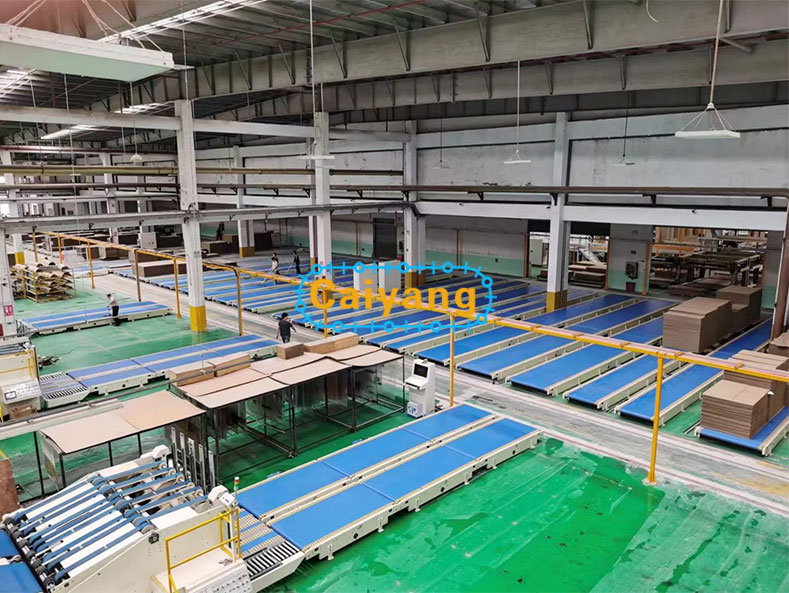
What is a Modular Plastic Belt Conveyor? How Does It Differ from Ordinary Belts?
A modular plastic belt conveyor is an automated conveying device composed of assembled plastic modular slats and hinge pins, driven by sprocket gear meshing. It is structurally different from traditional one-piece rubber belts and metal chain plate conveyors. Traditional rubber belts rely on friction driving, which easily slip and crack under long-term heavy loads. Once damaged, the entire belt must be replaced, resulting in high maintenance costs. They cannot be equipped with stopping or positioning accessories, making them unable to match precise automated processes. Metal chain plates feature heavy weight, high operating noise and easy rusting, which are not suitable for humid, food-grade or chemical working environments. In contrast, modular plastic belts adopt a segmented assembly structure with flexible disassembly and stable operation. They support straight, curved and inclined conveying and can be fitted with various auxiliary mechanisms, making them an upgraded replacement for modern intelligent production lines.
Why Choose Modular Plastic Belt for Automated Pallet and Stacker Conveying?
In automated warehousing, packaging sorting and intelligent production line logistics scenarios, pallets and stackers are heavy-duty and regular-shaped materials, which put forward extremely high requirements for the stability, accuracy and compatibility of conveying equipment. Traditional conveyor equipment can hardly meet the dual needs of heavy-duty transportation and precise positioning and diversion, while modular plastic belt conveyors are specially optimized for the automated transportation of pallet materials, perfectly solving various industry pain points.
Firstly, the equipment adopts sprocket meshing drive. Different from the friction drive of ordinary belts, it never slips during operation with uniform stress, which can stably carry various heavy-duty materials such as plastic pallets, wooden pallets and full cartons, and avoid material deviation and dumping during conveying. Secondly, the equipment can be flexibly equipped with automatic material stopping, limiting and diverting mechanisms to realize fixed-point pause, orderly queuing and accurate diversion of pallets, seamlessly connecting with subsequent automated processes such as palletizing, transferring, sorting and packaging to meet the needs of full-process automated production.
In addition, compared with rust-prone, noisy metal chain plates and wear-prone, difficult-to-transform rubber belts, modular plastic belts have the advantages of light weight, corrosion resistance and low operating noise, and can adapt to various complex working conditions such as dry and wet environments and normal temperature, with stronger stability for long-term continuous operation. At the same time, its modular splicing structure supports flexible on-site transformation, and the operation mode can be adjusted according to pallet size and production line layout, greatly improving the adaptability and operation efficiency of automated assembly lines. Therefore, it has become the preferred equipment for automatic conveying, positioning and diverting of pallets and stackers.
What Working Conditions Are Suitable for PP and POM Plastic Belts?
PP and POM are the two most common materials for modular plastic belts, with obvious performance differences. Selecting the correct material according to actual working conditions is critical to extending equipment service life and stabilizing production efficiency.
PP (Polypropylene) belts feature excellent acid and alkali resistance and cost performance. The applicable temperature ranges from -5℃ to 80℃. They are ideal for general warehousing, packaging, light industry, cold chain and slightly humid working environments. However, PP belts have poor low-temperature toughness and are not suitable for extremely cold environments or ultra-heavy loads.POM (Polyoxymethylene/Delrin) belts provide higher strength, superior self-lubrication, wear resistance and impact resistance with lower operating noise. Its temperature range covers -40℃ to 90℃, perfectly designed for heavy-duty pallet conveying, high-speed automated lines and long-term continuous operation.
POM belts are not easy to deform or break, making them the first choice for heavy pallet and carton transportation, while they are not resistant to strong acid and alkali. In short, choose PP for normal-temperature, humid and chemical environments; choose POM for heavy-load, high-speed and high-durability requirements.
How Do Different Belt Structures Match Conveying Requirements?
Modular plastic belts are available in multiple surface structures to match different process requirements and industry scenarios.
Solid-top belts feature a smooth and fully sealed surface without gaps. They prevent material leakage and jamming, making them the mainstream choice for pallets, cartons and bulk box transportation in automated warehousing and packaging lines. Perforated belts are designed with uniform water and air permeable holes, suitable for washing, air-drying and drying processes such as fruit and vegetable cleaning and product dehumidification.
Nub-top non-slip belts adopt raised anti-slip textures to avoid material sliding, specially customized for inclined and climbing conveying lines. Open hinge belts with large holes provide maximum permeability and strong drainage and slag removal performance, easy for high-pressure cleaning, widely used in aquatic product, slaughter and high-humidity clean workshops. Selecting the correct belt structure according to your process greatly improves line stability and production efficiency.
How Do Modular Belt Conveyors Realize Precise Positioning and Diverting?
The core difficulty of automated pallet lines lies in accurate stopping, fixed positioning and orderly diverting. Modular plastic belt conveyors can be equipped with professional auxiliary mechanisms to achieve high-precision material control. Intelligent stop mechanisms can be installed to automatically block moving pallets at designated positions, realizing precise positioning and providing accurate station points for robotic palletizing, grabbing and transferring. Multiple stop mechanisms cooperate with logical control to realize orderly queuing and interval feeding, avoiding material accumulation and collision.
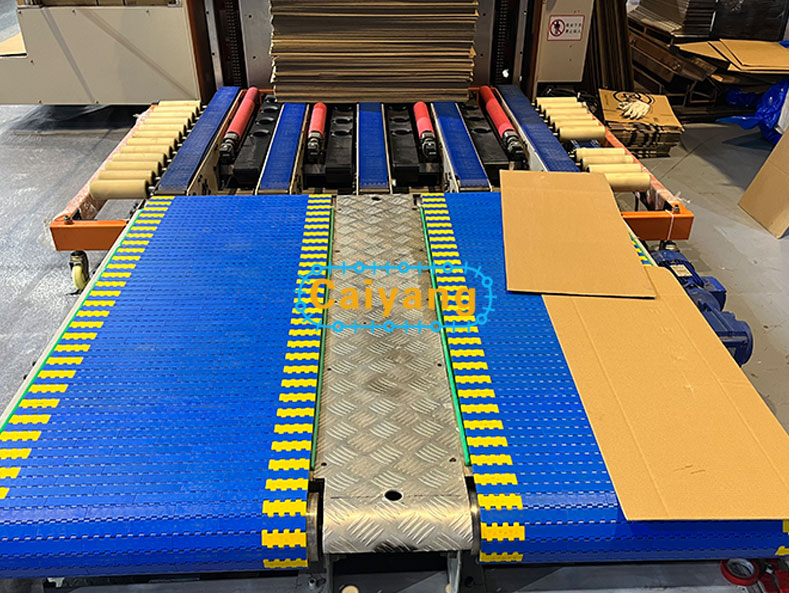
Meanwhile, side-pushing diverting and reversing devices can be matched to automatically sort, divert and switch pallet directions, accurately distributing materials to different processes and production lines. The whole positioning and diverting system is highly synchronized with the main belt conveyor, solving the problems of inaccurate positioning, chaotic diversion and material deviation of traditional lines, fully adapting to unmanned automated production.
Why Does Modular Structure Greatly Reduce Line Maintenance Costs?
Traditional belt and metal chain lines suffer from high maintenance costs and long downtime losses, while the assembled modular structure of plastic belts fundamentally reduces later operation and maintenance expenses. Once ordinary rubber belts are partially damaged or cracked, the entire belt must be replaced, causing serious material waste and long production shutdowns. Deformed or rusted metal chain plates also require large-area replacement. In contrast, modular plastic belts are composed of independent single modules. Only the damaged individual modules and pins need to be replaced instead of the whole belt, greatly saving spare part costs. The replacement process is simple and fast, effectively reducing downtime and improving equipment operation rate. In addition, plastic modular belts are corrosion-resistant, rust-proof and easy to clean. Daily maintenance only requires simple water cleaning without frequent lubrication, ensuring much lower long-term comprehensive maintenance costs than traditional conveying equipment.
What Customization Can Be Realized for Modular Plastic Belt Lines?
Different factories have unique workshop layouts, material sizes and process flows, so standard equipment often fails to meet personalized production needs. Non-standard customization is one of the core advantages of modular plastic belt conveyors. We provide full-range customization according to customers’ on-site conditions, including customized length, width, height and inclination angles. Auxiliary accessories such as side guards, anti-slip strips, limit baffles and isolation plates can be installed to adapt to different pallet and carton sizes. Automatic stopping, manual blocking, side diverting and positioning mechanisms are optional to match upstream and downstream processes. The conveyor supports straight, curved, inclined and lifting connection layouts. Meanwhile, food-grade FDA-certified, anti-static and high-temperature-resistant materials are available for different industrial scenarios, providing fully personalized automated conveyor solutions.
Which Industries Are Most Suitable for Modular Plastic Belt Conveyors?
With stable heavy-load capacity, precise positioning and diverting performance, low maintenance cost and corrosion resistance, modular plastic belt conveyors are widely applied in various automated industries. Warehouse logistics: automatic conveying, sorting and palletizing of plastic pallets, wooden pallets and turnover boxes. Packaging industry: post-packaging conveying and diverting of cartons, bags and gift boxes. Food processing: food-grade belts for fruit and vegetable cleaning, baking, aquatic product and beverage production lines. Light industry and auto parts: stable conveying and sorting of small components, plastic parts and metal parts. Cold chain and chemical industry: low-temperature and corrosion-resistant performance adapts to humid, weak acid and weak alkali working environments. With strong versatility, it has become a universal upgrading equipment for industrial automation.
What Are Common Plastic Belt Faults and How to Avoid Them?
During long-term operation, modular plastic belts may encounter common faults, mostly caused by incorrect material selection, installation deviation and improper daily operation, which can be effectively avoided through standardized maintenance. First, belt deviation: mainly caused by asymmetric sprockets, unbalanced frame and unbalanced material load. Calibrate sprocket coaxiality, keep the frame horizontal and ensure uniform feeding. Second, belt fracture and deformation: usually caused by wrong material selection, long-term overload and hard impact. Using PP belts in high-temperature environments or ordinary belts for heavy loads easily causes damage. Always select materials according to working conditions. Third, pin falling off and loosening: resulted from over-tight belt tension and frequent start-stop impact. Keep proper belt tightness during commissioning. Fourth, excessive operating noise: caused by lack of lubrication, foreign jamming and module misalignment. Regularly clean foreign objects and lubricate driving parts. Standard selection, correct installation and regular simple maintenance can maximize belt service life and stabilize production line operation.
How to Choose the Right Modular Belt Conveyor Solution for Your Line?
Choosing a suitable modular belt conveyor solution should not only depend on price, but comprehensively consider five core parameters. First, material parameters: confirm material type (pallet, carton or bulk material), single weight and size to determine belt load grade and surface structure. Second, working environment: distinguish normal temperature, high temperature, low temperature, humid and chemical conditions to select PP, POM or special modified materials. Third, operating speed: match motor and sprocket configuration according to production capacity requirements. Fourth, process requirements: confirm whether positioning, stopping, diverting, inclined or curved conveying is needed to customize supporting mechanisms. Fifth, site layout: design conveyor length, width and overall structure according to workshop space size. The solution customized based on the above parameters can perfectly match production processes, reduce failure rates and lower long-term maintenance costs. If you have project demands, please provide your working conditions, and we will offer one-to-one customized automated conveying solutions.