
Modular plastic chain plate supplier
How to solve the multi scenario solution of modular mesh belt in manufacturing industry
Food safety is the top priority for food factories. Metal conveyor belts have many seams and corners where residue and grease can easily accumulate. These small gaps are difficult to clean thoroughly, and prolonged residue can breed microorganisms, posing a food safety hazard. In contrast, food-grade plastic conveyor belts have a smooth, flat surface, small modular gaps, and no sharp corners. They support high-pressure washing, foam cleaning, and online CIP cleaning. Material residue is less likely to adhere, making cleaning simple and efficient, meeting food production hygiene standards and reducing the risk of product contamination.
In terms of material properties, plastic conveyor belts have good resistance to acids, alkalis, and corrosion. Food production often involves contact with media such as salt water, fruit and vegetable juices, sauces, and cleaning agents. Even stainless steel will rust and shed debris after prolonged contact with corrosive materials. Plastic conveyor belts are made of POM and PP food-grade engineering plastics, which will not rust and will not produce metal fragments that fall into the product, preventing quality accidents caused by foreign matter contamination from the source. They are suitable for highly corrosive conditions such as pickling, seafood processing, and fruit and vegetable processing.
In terms of operation, plastic conveyor belts do not require lubrication. Metal chains require lubrication to operate; any grease dripping can directly contaminate food, necessitating complex anti-drip structures in many workshops. Plastic chain conveyors, relying on their material’s self-lubricating properties, operate without lubrication, avoiding the risk of oil contamination. They also operate with low noise, improving the workshop production environment.
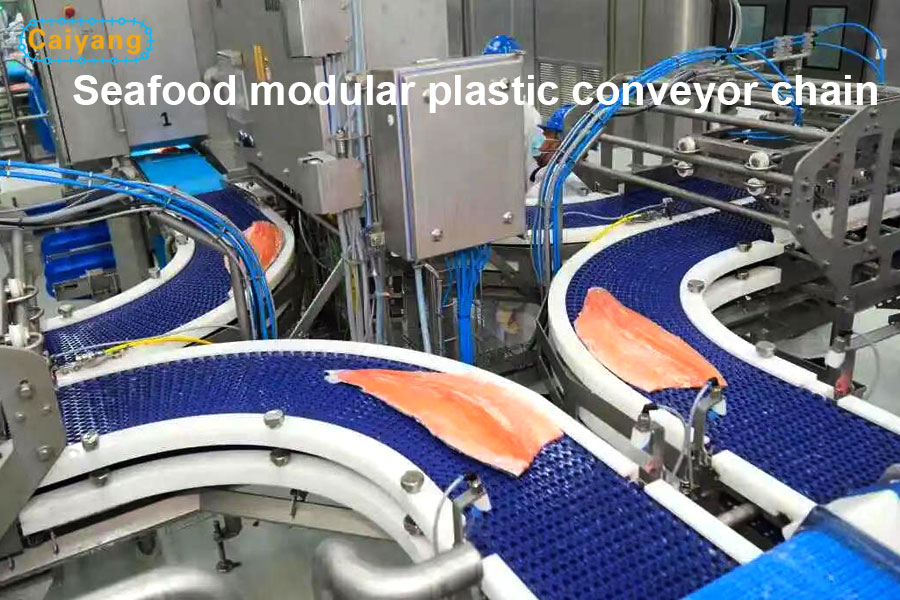
I. Technical Principles and Structural Design Plastic mesh conveyor lines are composed of mesh or flat modules connected by pins to form a closed-loop chain. The mesh belt wire diameter ranges from 1.0mm to 5.0mm, with a thickness of 10mm, and its strength can be adjusted according to load requirements. The plastic material (such as polypropylene and polyethylene) is specially formulated to enhance wear resistance and impact resistance, while its self-lubricating properties reduce frictional resistance with materials. The mesh design facilitates the passage of liquids or debris, preventing residue; the flat design is suitable for conveying flat materials. Color options include white, blue, and green to easily distinguish different production stages or hygiene requirements.
II. Core Application Scenarios and Adaptability This equipment primarily serves scenarios requiring corrosion resistance, high temperature resistance, and high cleanliness. For example, in the food industry, it is compatible with baking ovens, fryers, and cooking equipment, withstanding high temperatures while avoiding metal ion contamination; in fruit and vegetable washing machines and food cooling lines, the mesh structure promotes water flow and improves cleaning efficiency; in quick-freezing tunnels, the low thermal conductivity of the plastic material reduces cold loss. Furthermore, the chemical industry utilizes its corrosion resistance to transport acidic or alkaline materials, while the logistics industry uses horizontal conveyor lines for package sorting. Its tensile strength design meets the needs of heavy material transport, avoiding the risk of breakage.
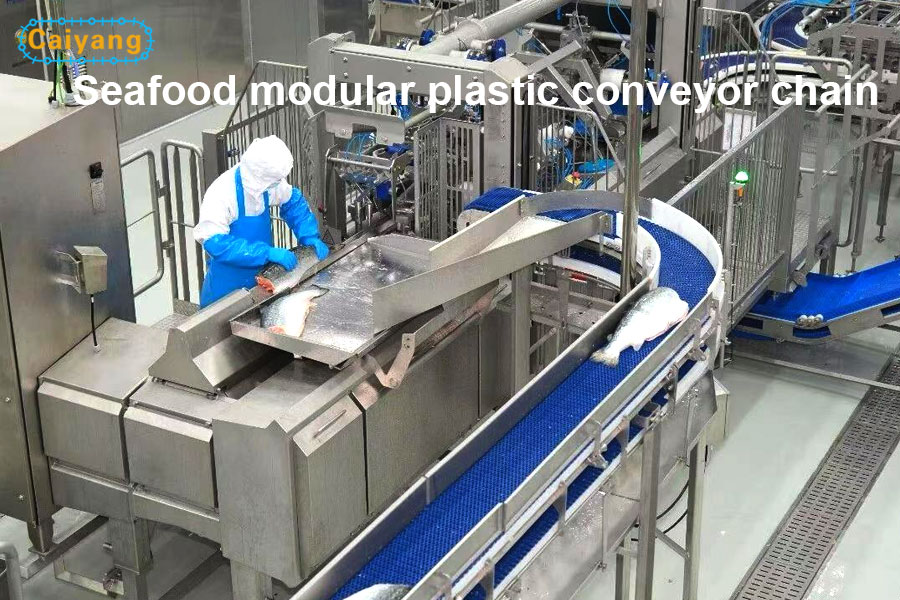
III. Technical Advantages and Practical Performance Compared to traditional conveyor belts, plastic mesh conveyor lines offer advantages in three aspects: First, wear resistance; the plastic material has moderate surface hardness, making it less likely to scratch materials, and its own wear rate is low; second, impact resistance; the modular structure disperses impact force, avoiding localized deformation; third, operational stability; self-lubricating properties reduce drive energy consumption, and noise is reduced by more than 30% compared to metal belts. In terms of maintenance, modules can be replaced individually, reducing downtime costs; during cleaning, the mesh structure has no dead angles, supporting high-pressure water guns or chemical solvent washing, meeting food-grade hygiene standards. Its strong tensile strength allows it to maintain stable tension during long-distance transport, reducing the risk of deviation.