
Modular plastic chain plate supplier
How to Solve Plastic Mesh Belt Wear Problem?
Plastic modular mesh belts are widely used in food, beverage, packaging and logistics sorting lines. Wear is the most common failure. Excessive wear will cause uneven running, chain jumping,pin dropping and frequent production shutdown. Most wear problems are not caused by poor belt quality, but improper material selection, wrong supporting parts, installation deviation and irregular operation. This article sorts out the root causes and practical solutions.
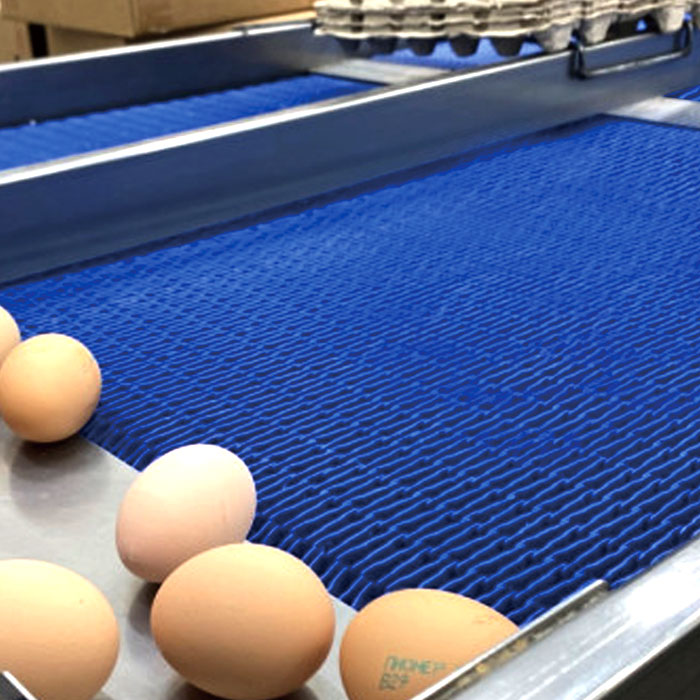
1.Select the Correct Wear-resistant Material for Working Conditions
Material mismatch is the top cause of premature wear.
- Modified POM: High rigidity, low friction and excellent wear resistance. It is the first choice for dry high-speed packaging lines, carton and bottle conveying.
- Food-grade PP: Good resistance to water and cleaning agents, suitable for wet washing and CIP disinfection lines. But its wear resistance is weaker than POM, not recommended for long-time dry friction.
- Anti-static special grade: For electronic packaging workshops, it balances anti-static performance and wear resistance.
- Reinforced mesh structure: For heavy-load and abrasive materials, choose thickened mesh or reinforced hinge design.
2.Check and Replace Matching UPE Wear Strips
Most side and bottom wear comes from friction between the mesh belt and support rails. Ordinary plastic or metal guide rails will scratch the mesh belt quickly.
Solution: Use UHMWPE/UPE wear strips with self-lubricating property. Keep the wear strip surface flat, smooth and without burrs. Replace worn, grooved and deformed wear strips in time. Do not run the mesh belt directly on steel frames.
3.Ensure Sprocket Matching and Alignment
Mismatched or worn sprockets will grind the hinge and pin hole of the mesh belt continuously.
- Use sprockets of the same series and pitch as the mesh belt. Do not mix different brands or tooth shapes.
- Check sprocket tooth profile regularly. If the tooth is worn, sharp or deformed, replace the sprocket together with the mesh belt.
- Keep driving and driven sprockets parallel and on the same horizontal plane to avoid unilateral stress and edge wear.
4.Adjust Line Alignment and Prevent Deviation
When the mesh belt runs off track, the edge will keep rubbing against side guards and frames.
Solutions:
- Calibrate the whole conveyor frame to keep straight sections horizontal and turning sections with standard radius. Too small turning radius will cause serious edge extrusion wear.
- Leave reasonable clearance between mesh belt and side guards. Avoid tight clamping.
- Install limit guides correctly to guide operation instead of squeezing the belt.
5.Control Load and Avoid Long-time Sliding Friction
Overload and product sliding will accelerate surface abrasion.
- Do not exceed the rated load of the mesh belt. Heavy goods should adopt reinforced mesh model or multi-belt layout.
- Reduce long-time accumulation sliding: When bottles or cartons stay stationary while the belt keeps moving,the friction will wear the mesh surface rapidly. Add no-pressure divider or accumulation buffer structure for accumulation sections.
- Avoid sharp, sandy and abrasive materials directly contacting the mesh surface.
6.Standardize Cleaning and Daily Maintenance
Improper cleaning and dirty residue will speed up wear and aging.
- Clean sand, food debris, sugar sediment and hard particles on rails and mesh regularly. Hard debris acts as abrasive powder between the belt and wear strip.
- For food lines, use mild cleaning agents. Strong corrosive chemicals will degrade plastic material and reduce wear resistance. Avoid high-pressure water jet impact on hinge positions.
- Check pins, hinge gaps and mesh surface every shift. Replace worn single modules promptly. The modular design allows partial replacement instead of changing the whole belt.
7.Optimize Operation Habits
Frequent emergency start, sudden braking and impact loading will bring repeated fatigue wear.
- Adopt soft start and stable speed regulation. Reduce frequent start-stop.
- Avoid dropping products from high height onto the mesh belt. Impact will crack mesh nodes and aggravate local wear.
- Control running speed properly. Higher speed brings higher friction loss.
Quick Troubleshooting Guide
- Edge wear: Check alignment, turning radius, side guard clearance and wear strip
- Hinge & pin hole wear: Check worn sprockets, pitch mismatch
- Uniform surface scratch: Check residual abrasive particles, wrong rail material
- Local concentrated wear: Check overload, long-time accumulation sliding
Final Summary
Solving plastic mesh belt wear is a systematic work: suitable material selection, qualified supporting accessories, accurate installation and standardized daily maintenance are equally important. Correct adjustment can greatly extend service life and cut your replacement cost and downtime.
More details, welcome to contact Shanghai Caiyang.