
Modular plastic chain plate supplier
How to Choose Plastic Conveyor Belts
When choosing a plastic conveyor belt, the key is to first distinguish whether you need a modular plastic mesh belt (chain plate) or a lightweight plastic conveyor belt made of PVC/PU material. The two have completely different structures, material logic, and applicable scenarios. First, clarify the type, then filter by material, structure, and environment to avoid most selection errors.
Step 1: First, distinguish which type of “plastic conveyor belt” you need. The “plastic conveyor belts” commonly referred to on the market actually fall into two main categories:
Modular Plastic Mesh Belt (Chain Plate): These are made of interlocking plastic modules connected by pins, driving like a chain. They are characterized by cut resistance, impact resistance, breathability, water permeability, and the ability to turn and climb slopes. Maintenance only requires replacing individual modules. Suitable for food processing, beverage bottle and can conveying, slaughtering lines, and electronic assembly lines.
PVC/PU Lightweight Conveyor Belt: These are flat belts with a fabric skeleton and a plastic cover layer, in a continuous loop. PVC is cheaper and has good lateral stability; PU is more wear-resistant and oil-resistant, and has a higher food-grade safety level. Suitable for logistics sorting, packaging, and conveying lightweight bulk materials.
If you want a “pieced-together structure like a chain,” see the modular mesh belt section below; if you want a “straight, flat belt,” focus on the PVC/PU comparison.
Step Two: Choose by Material—Temperature, Food Grade, and Chemical Resistance are Key
Common Materials for Modular Plastic Mesh Belts:
Material | Approximate Temperature Resistance | Key Advantages | Notes
PP (Polypropylene) | Approximately +100℃ | Good chemical resistance, food grade available | Relatively brittle at low temperatures
PE (Polyethylene) | Down to -73℃ | Low temperature resistance, impact resistant, food grade available | Weak high temperature resistance
POM (Polyoxymethylene/Ethylaldehyde) | -43℃ ~ +95℃ | High tensile strength, low friction, dimensional stability | Not suitable for strong acid and alkali environments
PA (Nylon) | -45℃ ~ +110℃ | Good toughness, impact resistant | Moisture absorption needs attention
Data compiled from manufacturer technical data. If direct contact with food is involved, be sure to confirm that the material has FDA or corresponding food grade certification. For anti-static requirements, conductive/antistatic modified materials can be selected.
Choosing between PVC and PU lightweight conveyor belts: If directly contacting food (meat, baked goods, pharmaceuticals), PU is preferred as it meets FDA standards and is oil and washable. If only for downstream packaging and logistics with a limited budget, PVC offers better value, but its oil resistance is poor, and it ages easily with prolonged contact with oil stains.
Step 3: Choosing by Structure – Surface Type Determines its Ability to “Hold” Materials
The surface of modular conveyor belts is not chosen arbitrarily:
Flat/Closed-cell type: A closed surface, suitable for conveying small items, bottles, and products requiring stable support; also easier to scrape and clean.
Open-cell type: Breathable and water-permeable, suitable for applications requiring drainage, cooling, and rinsing, such as seafood processing and conveying washed vegetables.
Rib/Baffle type: Essential for incline conveying. Common baffle heights are 32mm, 50mm, 76mm, 102mm, and 120mm, selected based on the inclination angle and material.
For turning production lines: Choose a side-bending chain when turning. Do not force the belt to deviate using a straight belt, as this can easily cause wear and tear.
Step 4: Check the details of the operating conditions; don’t overlook the pins and sprockets. Plastic conveyor belts are not just “plastic”; the pins and sprockets also affect their lifespan. Pins are commonly made of stainless steel; confirm the corrosion resistance rating for humid or corrosive environments. The number of sprocket teeth must match the belt pitch; common tooth counts are 10, 12, and 14 teeth. Additionally, check the ambient temperature based on the more stringent of the material temperature and ambient temperature, not just the ambient temperature of the workshop.
Quick Self-Checklist
Ask yourself five questions before ordering:
Does the material come into direct contact with food? → Decide whether to use FDA-grade materials.
Is there oil, acid, alkali, or cleaning agents present? → Decide whether to choose PP/POM or avoid certain materials.
Does it need to climb slopes or turn? → Decide on baffles/side-bending chains.
Does it need drainage or ventilation? → Decide whether to use open or closed perforations.
Is it a complete replacement or a piece-by-piece repair? → Modular mesh belts have lower maintenance costs; flat belts require complete replacement.
If you could tell me the material being conveyed, the ambient temperature, whether food-grade materials are required, and whether the production line has inclines or turns, I can help you narrow it down to the specific material and belt type.
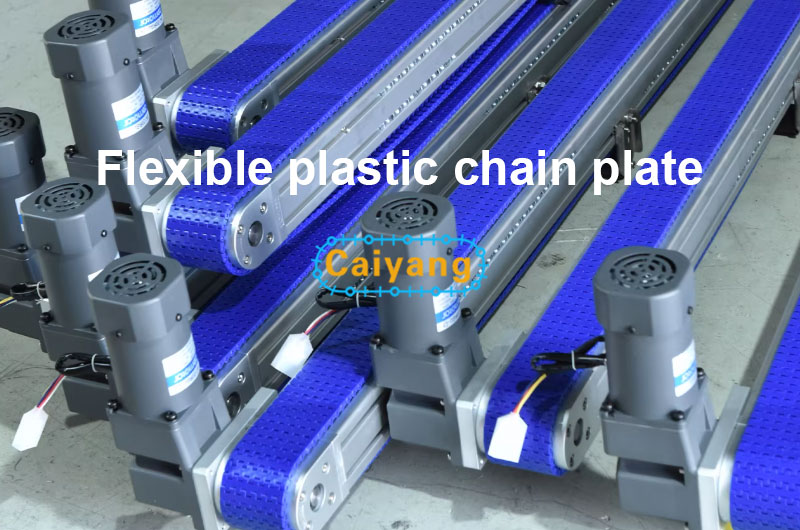
Plastic conveyor belts (modular conveyor belts/chain plates) have a wide range of applications, but they are primarily concentrated in two main areas: the food and processing industries, where hygiene and corrosion resistance are paramount, and industrial manufacturing sectors requiring cut resistance, wear resistance, or specialized processes.
Food and Beverage Processing: This is the most mature and specialized area for plastic conveyor belts. Thanks to their corrosion resistance, ease of cleaning, and food-grade compliance, they cover almost the entire process from raw materials to finished products.
Meat, Poultry, and Aquatic Product Processing: Used for slaughtering and cutting pigs, cattle, sheep, chickens, and ducks, as well as conveying, thawing, and draining aquatic products such as fish and shrimp. For these applications, some designs (such as Habasit’s HyCLEAN series) are specifically optimized for hinge structures to reduce organic debris residue and facilitate cleaning.
Fruit, Vegetable, and Baking: Used for fruit grading, draining and conveying vegetables after washing, and cooling lines for baked goods. Open-mesh conveyor belts are commonly used here due to their breathability and water permeability.
Beverage and Canning: Ideal for conveying PET bottles, glass bottles, and aluminum cans. In filling, sterilization, bottle cooling machines, and bottle storage platforms, flat or curved conveyor belts ensure smooth transitions between bottles and cans.
Industrial Manufacturing and Automation
In non-food sectors, plastic conveyor belts primarily replace some metal or traditional belts due to their lightweight, acid and alkali resistance, and ease of maintenance (individual replacement is possible).
Electronics and Batteries: Used in electronic component assembly lines and battery manufacturing processes. Antistatic (AS) modified materials prevent electrostatic damage.
Automotive and Tires: Certain FDA/USDA compliant belt types are used on tire rubber production lines; they are also used for general conveying of automotive parts.
Logistics and Warehousing: Used in postal and warehouse sorting systems. Modular conveyor belts have a smooth surface and are easy to clean, improving efficiency in parcel sorting.
Other Specialty Processes: Including pulp and paper making, wood processing, textile printing and dyeing, and even amusement facilities (such as conveyor sections of slides). Plastic conveyor belts are also frequently used as key conveyor components inside equipment such as microwave dryers, heat shrink packaging machines, and sterilizers.
Important Considerations for Conveying Types: The application range depends not only on the industry but also on the production line layout. Plastic conveyor belts support various forms, including horizontal straight lines, inclined lifting, turning (side-bending chains), and even spiral towers. If your workshop space is limited and requires turning, or if you need to lift materials to higher levels, simply select the corresponding turning type or type with baffles.
If you have specific material requirements (such as oily meat or dry electronic components) and production line layout, we can discuss the suitable belt type in more detail.
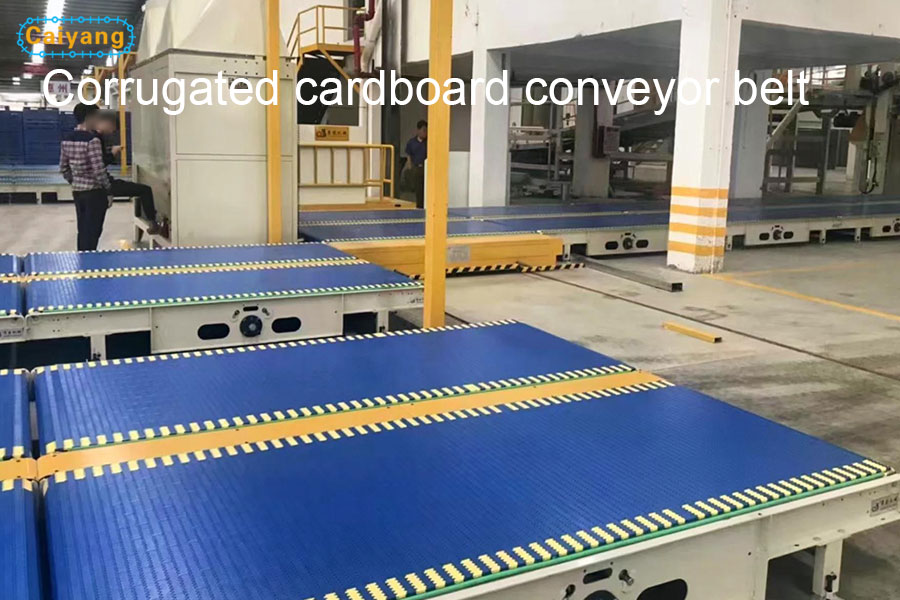
What are the advantages of modular conveyor belts?
The core advantages of modular plastic conveyor belts can be summarized as follows: replacing “whole belts” with “assemblies,” thus achieving conveniences in maintenance, hygiene, anti-deviation, and complex layout that are difficult to achieve with traditional whole belts or metal belts.
Specific advantages are reflected in the following aspects:
Low maintenance costs and short downtime: This is the most direct benefit of modular design. Traditional continuous belts, once torn or partially damaged, often require replacement of the entire belt, which is time-consuming and expensive. Modular conveyor belts, however, are composed of independent small pieces; only the damaged part needs to be replaced, significantly reducing maintenance costs and downtime losses.
Hygienic and easy to clean, suitable for food and pharmaceutical industries: The conveyor belt material (such as PP, PE, POM) is inherently water and oil resistant, and its structure lacks capillaries, making it difficult for dirt to penetrate. Combined with open or open hinge designs, water and detergent can directly penetrate during cleaning, preventing dirt accumulation and better controlling bacterial growth. This is also a key reason for its widespread use in food production lines such as slaughterhouses, seafood processing plants, and bakeries.
Sprocket Drive, Less Prone to Deviation
It uses a positive drive principle, relying on the meshing of sprocket teeth with the bottom of the belt for propulsion, rather than friction. This rigid transmission method makes the conveyor belt less prone to snaking or deviating during operation, making it particularly suitable for production lines requiring long-distance or high-speed stable transport.
Flexible Layout, Capable of Turning and Climbing Inclines
Its modular structure allows for easy configuration into turning or climbing types. On production lines requiring turns, using a side-bending chain is more reliable than forcibly correcting deviation with a straight belt; adding baffles on climbing sections effectively prevents material rollback. This is particularly useful for layouts with limited workshop space that require navigating around obstacles.
Durable and Adaptable
Compared to cloth or PVC belts, plastic modules are more resistant to cuts, impacts, and corrosion. They are also lighter than metal conveyor belts, resulting in lower energy consumption. By selecting different materials (such as PP for chemical resistance and PE for low-temperature resistance), they can adapt to various environments ranging from freezing to baking, from acid and alkali cleaning to oil contact.
However, it also has limitations: traditional thin synthetic belts still have certain advantages in situations requiring the transfer of tiny precision parts using extremely small rollers (cutting edge), or where there are strict limitations on noise and extremely high speeds. But in most industrial conveying scenarios that prioritize durability, hygiene, and ease of maintenance, modular mesh belts offer more comprehensive benefits.
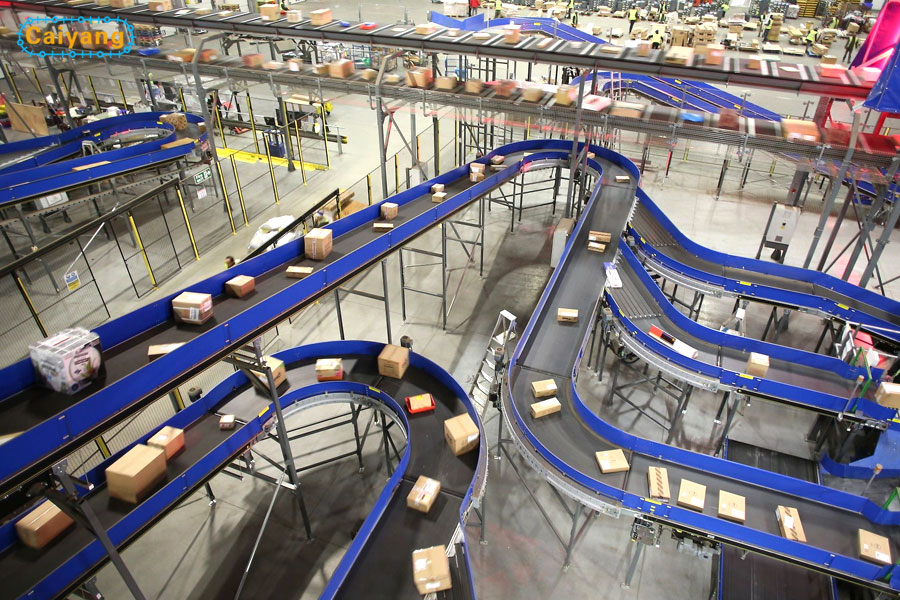
What are the different pitches of plastic conveyor belt chains?
There is no globally unified standard for the pitch of plastic conveyor belts; different manufacturers and series will have variations. However, the common pitch specifications on the market do form a relatively concentrated range, from a few millimeters for conveying small, precision parts to tens of millimeters for heavy-duty loads.
Common Pitch Ranges
Based on information from multiple manufacturers and suppliers, common pitches (unit: mm) roughly include:
Small/Medium Pitch (commonly used for light-load, precision conveying, or space-constrained production lines): 8, 12.7, 14, 15, 15.2, 19.05, 25, 25.4, 27.2, 30.
Large Pitch (commonly used for medium to heavy-duty loads, food processing, or industrial assembly lines): 38, 38.1, 40, 46, 50, 50.8, 57.15, 63.5.
How to Interpret These Numbers
You may find that some pitches are very close, such as 25mm and 25.4mm, or 50mm and 50.8mm. This difference usually stems from the conversion between metric and imperial units (25.4mm equals 1 inch). Different brands (such as Tsubakimoto, Forbo) or different product series may use their own internal standards.
For actual selection, the pitch itself is not the only factor. It needs to match the number of teeth on your sprocket and also affects the minimum turning radius and open area ratio of the conveyor belt. If you are replacing the conveyor belt in existing equipment, the safest approach is to directly measure the pitch of the old conveyor belt (the distance between the centers of two adjacent pins), or provide the equipment model to the supplier to ensure compatibility.
If you have a specific belt type or application scenario (such as turning conveyor or straight-line incline), I can also help you find the corresponding common pitches.
Shanghai Caiyang Plastic Products Co., Ltd., established in 2010, is located in Jiufu Economic Development Zone, Songjiang District, Shanghai. It is a professional enterprise specializing in the R&D and production of core components for conveyor equipment. Its core products include conveyor chains, chain plates, and mesh chains, providing crucial support for automated conveyor systems across various industries.
With over 20 years of experience in mold design and processing, the company has built a mature technology and production system. Guided by a human-centered design philosophy and integrating high-quality production processes, the company strictly controls quality at every stage, from raw materials to finished product, ensuring stable performance and reliable quality. Furthermore, recognizing the importance of after-sales service, the company has established a highly responsive after-sales team to promptly resolve customer issues. This dual guarantee of “product + service” has earned the long-term trust and support of a wide range of customers.