
Modular plastic chain plate supplier
How to choose a plastic conveyor belt for a logistics sorting line
With the booming development of e-commerce and the rapid expansion of the logistics industry, innovative and precise sorting systems have become a key competitive advantage for modern logistics centers. Among numerous sorting devices, plastic conveyor belts occupy an important position in the logistics sorting field due to their excellent material properties and design advantages. This article will comprehensively analyze the performance of plastic conveyor belts in logistics sorting, systematically elaborating on their material properties, structural design, performance advantages, and practical application effects.
Material Properties of Plastic Conveyor Belts
Plastic conveyor belts are typically made of high-molecular polymer materials, commonly including polyethylene (PE), polypropylene (PP), polyoxymethylene (POM), and polyamide (PA). These materials endow conveyor belts with a series of excellent properties:
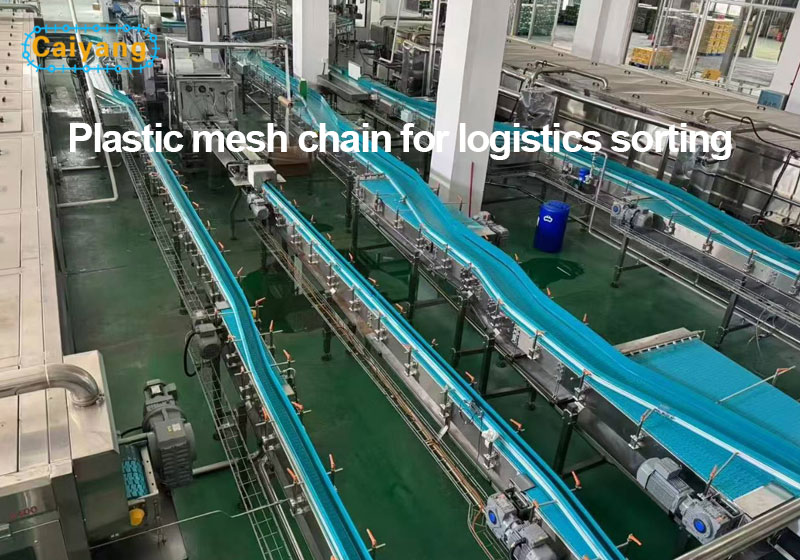
- Lightweight Characteristics: The density of plastic materials is much lower than that of metals, significantly reducing the overall weight of the conveyor belt, lowering the energy consumption of the drive system, and also reducing the load requirements on the supporting structure.
- Corrosion Resistance: Plastics have good resistance to most chemicals and are not as prone to rusting or corrosion as metals, making them particularly suitable for use in humid or chemically exposed environments.
- Wear Resistance: Modern engineering plastics undergo special formulation treatment, achieving a high level of surface hardness. This allows them to withstand long-term friction without easily wearing down, extending their service life.
- Self-Lubricating Properties: Some plastic materials possess self-lubricating properties, reducing the coefficient of friction between the conveyor belt and rollers/guide rails, thus lowering operating noise and energy consumption.
- Hygiene and Safety: Food-grade plastic materials meet hygiene standards and will not contaminate conveyed items, making them suitable for industries with strict hygiene requirements, such as food and pharmaceuticals.
Advantages of Plastic Conveyor Belt Structural Design
Plastic conveyor belts feature several innovative structural designs that contribute to their excellent performance in logistics sorting:
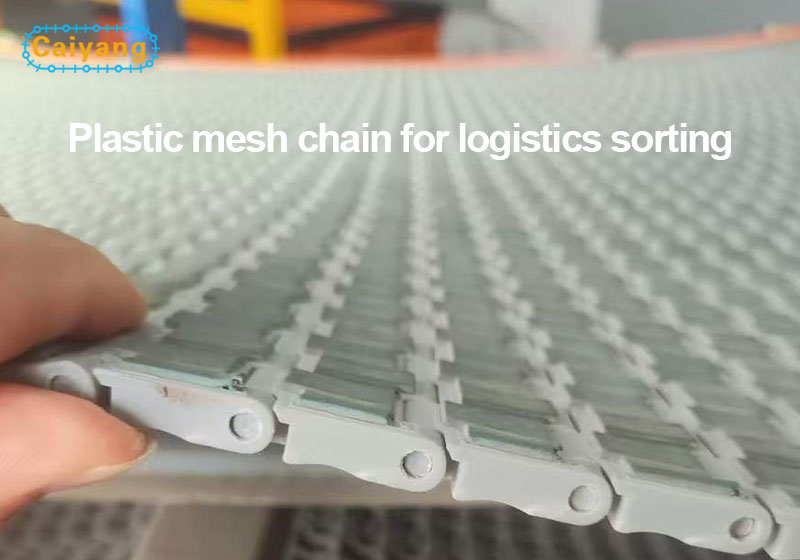
- Modular Design: Modern plastic conveyor belts often employ a modular splicing structure. Each module can be replaced independently, significantly reducing maintenance costs and downtime. This design also allows for flexible adjustment of the conveyor belt length according to actual needs.
- Diverse Surface Textures: Depending on the characteristics of different sorted items, the surface of the plastic conveyor belt can be designed with various textures, such as smooth surfaces, anti-slip stripes, and small raised dots, ensuring stability during item transport.
- Lateral Bending Capability: Specially designed plastic conveyor belts can bend horizontally, adapting to complex sorting path layouts and improving space utilization.
- Perforated Design: Some plastic conveyor belts feature regularly arranged perforations, facilitating the installation of sorting pushers, scanning equipment, etc., and also aiding in cleaning and drainage.
- Innovative Connection Method: Utilizing high-strength plastic hinges or metal core connectors, both connection strength and flexibility are ensured, allowing the conveyor belt to pass smoothly through rollers.
Performance Advantages of Plastic Conveyor Belts in Logistics Sorting
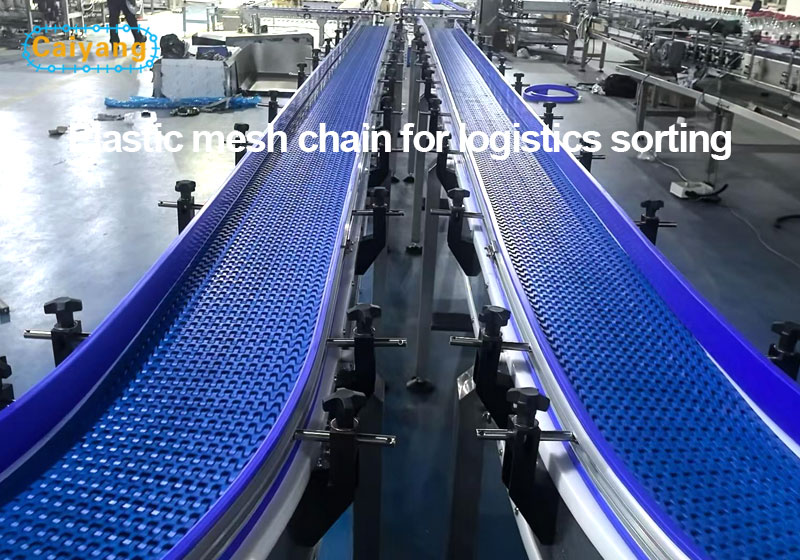
High-Efficiency Sorting Capacity
The efficiency demonstrated by plastic conveyor belts in logistics sorting:
- High-Speed Operation Stability: Plastic conveyor belts can withstand high operating speeds (typically up to 2-3 m/s) and maintain stable operation at high speeds without significant vibration or deviation.
- Precise Positioning Capability: Modular plastic conveyor belts have consistent dimensional accuracy, enabling precise positioning and sorting of items when combined with barcode scanning or RFID identification systems.
- Multi-directional Sorting Support: Plastic conveyor belts can be perfectly integrated with various sorting equipment (such as push-bar, swing-wheel, and slider sorters) to achieve multi-directional, multi-exit sorting operations.
Low Maintenance and Long Lifespan
- Lubrication-Free Design: Plastic conveyor belts typically do not require regular lubrication, reducing maintenance workload and the risk of contamination.
- Easy to Clean: The smooth plastic surface does not easily accumulate dust, making cleaning simple and quick, meeting the high hygiene standards of modern logistics centers.
- Fatigue Resistance: Plastic materials have excellent fatigue resistance, capable of withstanding long-term continuous operation without easily aging or deforming.
- Partial Replacement Possible: Modular design allows for the replacement of only damaged parts, rather than the entire conveyor belt, significantly reducing maintenance costs.
Environmental Adaptability
- Temperature Stability: Engineering plastics maintain good performance within a temperature range of -40℃ to +80℃, adapting to logistics centers with varying climatic conditions.
- Antistatic Treatment: By adding antistatic agents or surface coatings, plastic conveyor belts effectively prevent static electricity buildup, protecting sensitive electronic components.
- Moisture Resistance: Plastic does not absorb water and will not swell, deform, or grow mold like some materials in humid environments.
- UV Resistance: Outdoor plastic conveyor belts can have UV stabilizers added to prevent aging caused by direct sunlight.
Application Performance of Plastic Conveyor Belts in Different Sorting Scenarios
Express Parcel Sorting
In express delivery sorting centers, plastic conveyor belts perform excellently:
- Capable of handling parcels of various sizes and irregular shapes; the anti-slip surface design prevents parcels from sliding.
- Lightweight design reduces energy consumption, which is significant for express delivery sorting centers operating 24 hours a day.
- Abrasion-resistant surface can withstand friction from sharp edges of parcels, extending service life.
Food Logistics Sorting
The food industry has strict hygiene requirements, and plastic conveyor belts offer significant advantages:
- Meets food-grade hygiene standards and will not contaminate food.
- Seamless design and easy-to-clean surface meet the requirements of food safety management systems such as HACCP.
- Resistant to oils, acids, and alkalis, adaptable to various food transport environments.
E-commerce Warehousing and Sorting
E-commerce warehousing orders are characterized by a large number of SKUs and small batches, which plastic conveyor belts address:
- Modular design facilitates integration with automated sorting systems, enabling a “goods-to-person” picking model.
- Quiet operation improves the working environment, suitable for densely populated warehouse areas.
- Flexible layout adjustment adapts to seasonal order fluctuations and changing sorting needs.
Technological Development Trends of Plastic Conveyor Belts
With the increasing demands for intelligent and green logistics, plastic conveyor belt technology is constantly innovating:
- Intelligent Integration: Intelligent plastic conveyor belts with embedded sensors and RFID tags can monitor operating status and item information in real time.
- Material Innovation: The application of new materials such as nanocomposite materials and bio-based plastics further enhances the performance and environmental friendliness of conveyor belts.
- Energy Recovery: Research is being conducted on utilizing the kinetic energy generated by the plastic conveyor belt during operation to recover energy and further reduce system energy consumption.
- 3D Printing Repair: Technological advancements in on-site 3D printing of damaged modules will enable faster repair response times.
Limitations and Improvement Directions of Plastic Conveyor Belts
Despite the numerous advantages of plastic conveyor belts, some limitations remain:
- High-Temperature Environmental Limitations: Ordinary plastic conveyor belts may soften and deform under sustained high temperatures, necessitating the development of high-temperature resistant specialty plastics.
- Limited Load Capacity: Compared to metal conveyor belts, plastic conveyor belts have a relatively lower load-bearing capacity, making them unsuitable for sorting heavy items.
- Higher Initial Cost: The initial investment for high-quality engineering plastic conveyor belts may be higher than that for traditional rubber conveyor belts, but the long-term operating costs are lower.
To address these limitations, the industry is continuously improving the performance of plastic conveyor belts through material modification and structural optimization.
Plastic mesh conveyor belts are widely used conveying equipment in industrial production, primarily for material transfer. Their core component, the mesh conveyor belt, is made of plastic, possessing properties such as wear resistance, impact resistance, and self-lubrication. It operates with low noise, making it particularly suitable for conveying applications requiring cleanliness, corrosion resistance, or high-temperature resistance. Compared to traditional metal conveyor belts, plastic mesh conveyor belts offer superior flexibility, lower maintenance costs, and longer service life, making them an important tool in industries such as food processing, chemicals, and logistics.
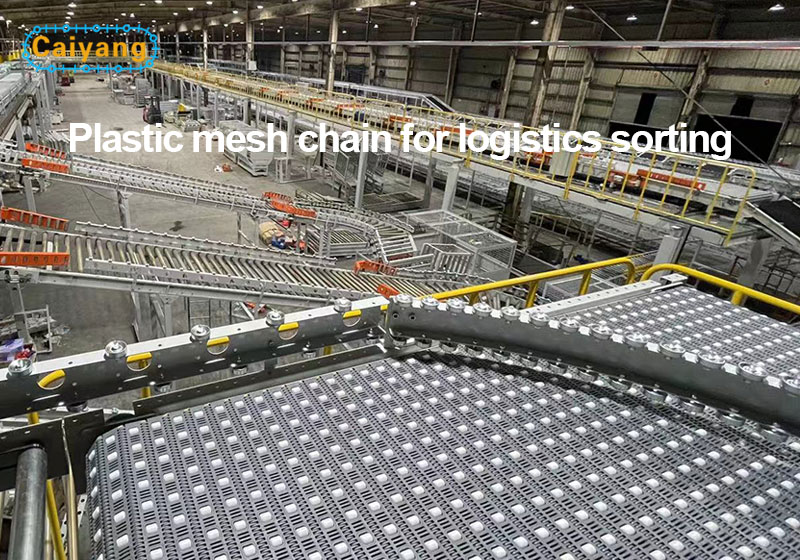
I. Technical Principles and Structural Design
Plastic mesh conveyor belts are composed of mesh or flat modules connected by pins to form a closed-loop chain. The mesh belt wire diameter ranges from 1.0mm to 5.0mm, with a thickness of 10mm, and its strength can be adjusted according to load requirements. The plastic material (such as polypropylene or polyethylene) is specially formulated to enhance wear resistance and impact resistance, while its self-lubricating properties reduce frictional resistance with materials. The mesh design facilitates the passage of liquids or debris, preventing residue; the flat design is suitable for conveying flat materials. Color options include white, blue, and green to easily distinguish different production stages or hygiene requirements. II. Core Application Scenarios and Adaptability
This equipment primarily serves scenarios requiring high corrosion resistance, high temperature resistance, and cleanliness. For example, in the food industry, it can be adapted to baking ovens, fryers, and cooking equipment, withstanding high temperatures while avoiding metal ion contamination; in fruit and vegetable washing machines and food cooling lines, the mesh structure promotes water flow, improving cleaning efficiency; in quick-freezing tunnels, the low thermal conductivity of the plastic material reduces cold loss. Furthermore, the chemical industry utilizes its corrosion resistance to transport acidic or alkaline materials, while the logistics industry uses horizontal conveyor lines for package sorting. The tensile strength design meets the needs of heavy material transport, avoiding the risk of breakage.
III. Technical Advantages and Actual Performance
Compared to traditional conveyor belts, the advantages of plastic mesh conveyor lines are reflected in three aspects: First, wear resistance; the surface hardness of the plastic material is moderate, making it less likely to scratch materials, and its own wear rate is low; second, impact resistance; the modular structure disperses impact force, avoiding localized deformation; third, operational stability; self-lubricating properties reduce drive energy consumption, and noise is reduced by more than 30% compared to metal belts. In terms of maintenance, modules can be replaced individually, reducing downtime costs. During cleaning, the mesh structure has no blind spots and supports high-pressure water jets or chemical solvents, meeting food-grade hygiene standards. Its strong tensile strength allows it to maintain stable tension during long-distance conveying, reducing the risk of deviation.
IV. Operating Procedures and Safety Precautions Before use, check the chain tension to avoid slippage due to excessive looseness or increased motor load due to excessive tightness. Overloading is prohibited during operation to prevent module breakage. Regularly clean residues to prevent mesh blockage. Avoid using strong acids or alkalis to prevent corrosion of the plastic surface during cleaning. Regarding temperature, the standard model is suitable for temperatures from -20℃ to 80℃, while the high-temperature model can be extended to 120℃, depending on the actual working conditions. In addition, the pins at module joints should be lubricated regularly to extend service life. For safety, protective railings should be installed around the equipment to prevent personnel from contacting moving parts.