
Modular plastic chain plate supplier
How to choose a modular belt
Plastic conveyor belts (typically including modular plastic conveyor belts, plastic chain conveyors, PVC/PU flat conveyor belts, etc.) are industrial and logistics transportation equipment made of plastic materials combined with fabrics or modular structures.
- Main Types
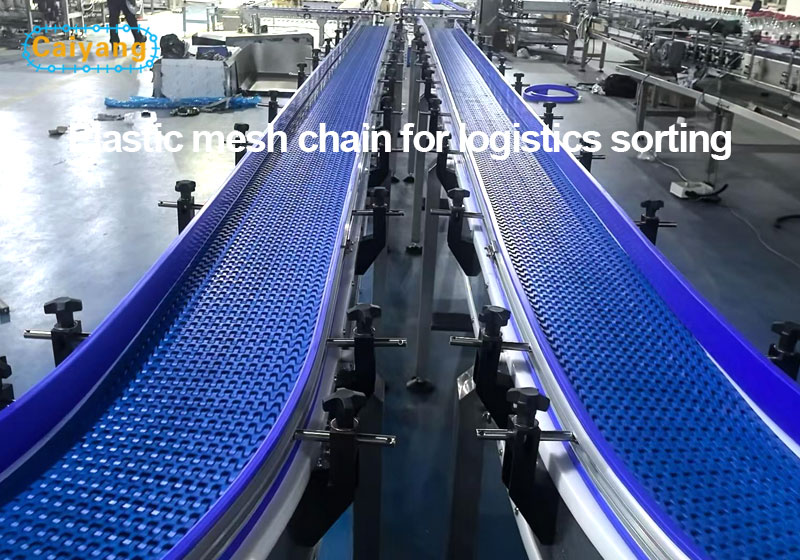
- Modular Plastic Conveyor Belts (MPB/Plastic Mesh Belts): Constructed from injection-molded plastic modules connected by pins, offering high flexibility and adaptability to straight or curved paths.
- Plastic Chain Conveyors (Tabletop Conveyor Chains): Commonly used for single or multiple rows of bottled and canned beverages and packaged goods.
- Flat Plastic Conveyor Belts (e.g., PVC, PU, PE): Smooth surface or with skirts/baffles, widely used in light industry, food processing, and logistics sorting.
- Common Materials and Their Characteristics
- PP (Polypropylene): Possesses excellent acid and alkali resistance, chemical corrosion resistance, is lightweight, and relatively inexpensive, commonly used in seafood cleaning or general food processing lines.
- POM (Polyoxymethylene/acetal): High mechanical strength, good rigidity, wear resistance, and low coefficient of friction, suitable for heavy-duty or high-speed conveyor belts.
- PE (Polyethylene): Good flexibility and excellent low-temperature resistance (commonly used in the frozen food industry).
- PU/PVC: Non-toxic and hygienic, meeting food contact standards, commonly used in production lines that come into direct contact with food.
- Main Advantages
- Hygienic and easy to clean: Open-pore or modular design facilitates rinsing, reduces bacterial growth, and meets food-grade hygiene standards.
- Corrosion and wear resistance: Compared to metal mesh belts, it does not rust; compared to pure rubber belts, it is more resistant to grease and chemical corrosion.
- Easy maintenance: Modular design allows for replacement of damaged sections, eliminating the need for complete replacement.
- Smooth operation and low noise: Low frictional resistance, smooth transmission with dedicated sprockets.
- Typical Application Industries
- Food and beverage: Meat processing, fruit and vegetable washing, baking, dairy products, bottling and canning production lines.
- Logistics and Packaging: High-speed sorting, box conveyors, incline or turning conveyors.
- Electronics and Light Industry: Component assembly lines, pharmaceutical packaging, and dishwasher conveyor systems.
You can refer to MPH’s professional modular plastic conveyor belts for more specifications and application solutions.
If you are purchasing or designing a conveyor line, please tell me:
- What materials are being transported (e.g., fresh food, boxes, bottled beverages?)
- What is the operating environment (normal temperature, high temperature, or cold storage?)
- Are there any special requirements such as turns or inclines?
Modular automation relies on clarity and repeatability. However, when ordering automated conveyor systems, the associated processes (design, procurement, logistics) are often fragmented, using tools that are not interoperable. This leads to fragmented workflows, repetitive work, and a lack of cross-team visibility.
Standard Components addresses this challenge with an integrated solution built on three pillars: intelligent engineering tools, a responsive logistics system, and comprehensive support services. These three elements work together to create a clearly structured workflow, simplifying daily tasks and optimizing long-term planning.
The design phase is often a problem area. Without a specialized environment, engineers are forced to use general-purpose CAD tools to model layouts, manually verify the compatibility of conveyor components with other parts, and simultaneously process bill of materials creation, causing complexity to arise from the outset.
Standard Components was created to eliminate these bottlenecks. Its 3D interface allows users to freely configure automated conveyor systems, transfer devices, bends, and support structures using a full range of modular components. Each component follows built-in configuration rules to ensure technical feasibility. Real-time collision detection instantly eliminates misalignment issues, preventing impact on subsequent processes.
As the layout evolves, the system automatically generates a complete and validated bill of materials. No manual verification required: The content presented in the design is pre-formatted and can be directly exported and proceed to the next step of the process.
Users can view prices, local inventory status, and estimated delivery dates based on actual inventory in real time. Orders can be placed instantly through the online platform or transferred to FlexLink sales representatives for coordination, eliminating the need for repetitive operations.
This flexibility allows the purchasing department to adapt to different internal processes while ensuring all stakeholders remain synchronized based on the same data. A built-in quick quotation tool allows users to independently test variant solutions, compare configuration options, and budget plans without waiting.
Delivery cycles depend on both logistical arrangements and design choices. With local inventory and strategic inventory management, FlexLink ensures short and predictable delivery times even for complex conveyor systems.
By linking the bill of materials to real-time OLS inventory, the system instantly presents clear information: which components (such as screw conveyors, pallet conveyors, modular conveyor components, belts, and chains) are available for immediate shipment, their estimated arrival times, and the project’s actual schedule. This reduces unnecessary waiting times, avoids emergency replanning, and allows for better coordination of installation personnel or production schedules.
In addition to digital tools and logistical support, the third pillar of the standard component solution is support services. This includes local and remote engineering assistance to help teams optimize layouts, adjust system parameters, or resolve integration issues.
The online store also serves as a core technology hub. Each configuration component is associated with corresponding CAD files, technical data sheets, and digital assembly instructions, all of which are directly accessible within the platform. There’s no need to search external databases or manually request documents; all content is tightly linked to the original Bill of Materials (BOM).
All components come with a full FlexLink product warranty, and every step of the process is traceable and supported.
The FlexLink standard component solution is not just a software feature or service catalog, but a unified, interconnected system comprised of engineering tools, logistics, and services.
By adopting standardized, modular delivery components and a unified digital platform, teams can collaborate more efficiently: reducing handover steps, mitigating risk, and enabling full-process visibility management.
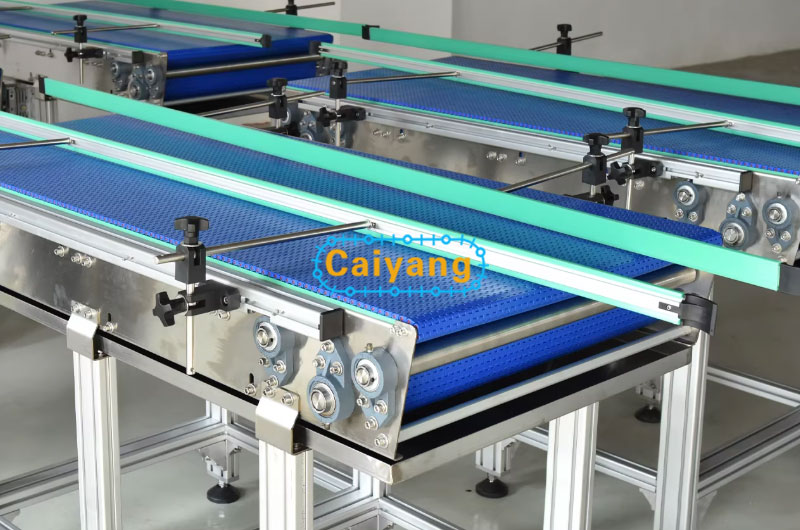
Plastic conveyor belts are conveyor belts made of high-quality plastic materials, offering numerous advantages and suitable for a wide range of applications. The following will introduce plastic conveyor belts from two aspects: advantages and application areas.
First, the advantages of plastic conveyor belts include, but are not limited to, the following:
- Lightweight and Portable: Compared to metal conveyor belts, plastic conveyor belts are lighter and easier to carry and install, saving labor and time costs.
- Strong Corrosion Resistance: Plastic conveyor belts have excellent corrosion resistance and can be used for extended periods in harsh environments such as humid and acidic/alkaline conditions without easily rusting or corroding.
- Non-Conductive: Plastic conveyor belts are non-conductive, preventing static electricity generation and reducing safety hazards such as fires.
- Reduced Noise: Plastic conveyor belts generate less noise during transmission, reducing noise pollution in the working environment.
- Easy to Clean: The smooth surface of plastic conveyor belts is easy to clean, preventing the accumulation of dust and water, maintaining cleanliness and hygiene.
Secondly, plastic conveyor belts have wide applications in various fields, including but not limited to the following:
- Food processing industry: Plastic conveyor belts meet food hygiene and safety standards, are odorless and non-toxic, and can be used for food packaging and transportation.
- Chemical industry: Due to their excellent corrosion resistance, plastic conveyor belts can be used in the chemical industry for the transportation of chemicals, acids, alkalis, and other substances.
- Logistics and transportation industry: Plastic conveyor belts are lightweight and portable, suitable for the rapid transportation of various goods, improving logistics efficiency.
- Food and beverage industry: Plastic conveyor belts can quickly transport various beverage bottles, food packaging, etc., improving production efficiency.
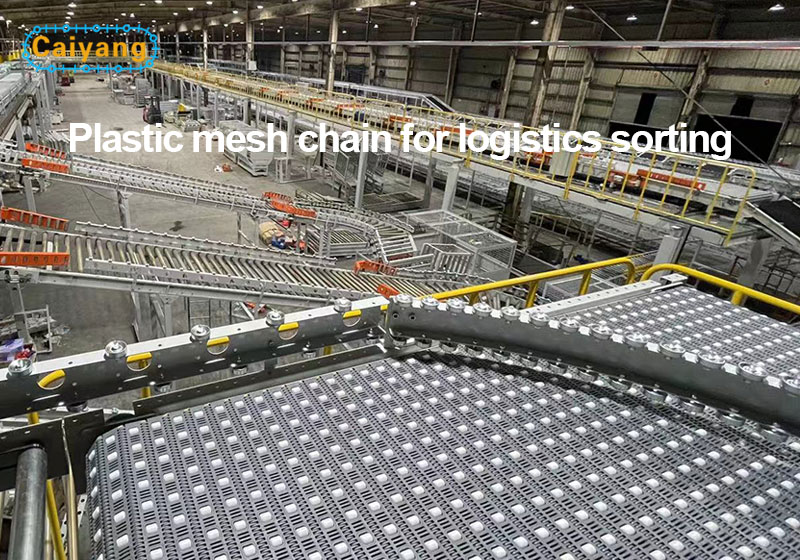
The core principle of a plastic conveyor belt is to achieve continuous cyclic transport of materials through sprocket drive and a modular interlocking structure.
Unlike ordinary belts, it is not driven by friction between rollers and the belt itself, but by the meshing of sprockets and chain teeth on the belt body. This prevents slippage and deviation, resulting in more stable operation and the ability to carry heavier materials.
Structural Components
Module Units: Plastic modules injection-molded from engineering plastics such as PP (polypropylene), PE (polyethylene), POM (polyoxymethylene), and nylon, forming the foundation of the belt.
Articulated Pins: These interlock and connect the individual plastic modules like bricks, spanning the entire width of the belt to form a complete conveyor belt.
Drive System: Composed of a motor, reducer, and sprockets. The sprockets mesh with the belt body, providing power and traction for the conveyor belt to circulate.
Working Principle
Power Transmission: The motor transmits power to the drive sprocket through the reducer, and the sprocket then drives the plastic belt to circulate along the track.
Material Conveying: Materials are placed on the belt surface and continuously pushed forward as the belt moves.
Circular Operation: After completing one revolution, the belt returns to the starting point to continue carrying materials, achieving continuous and uninterrupted conveying. Main Features:
Anti-deviation: The sprocket meshing drive prevents stretching, slippage, serpentine movement, or deviation during conveying.
Easy Cleaning: The module surface is free of pores and gaps, meeting food hygiene standards. It is not easily penetrated by contaminants such as grease and blood, and will not absorb impurities.
Corrosion Resistance: It has a certain degree of resistance to grease and moisture, and is also resistant to acids, alkalis, and salt water, making it suitable for humid environments such as aquatic products, beverages, and chemicals.
Convenient Maintenance: Modular assembly allows for easy replacement of damaged parts, eliminating the need for specialized vulcanization or splicing equipment and reducing downtime.
Usage Notes