Modular plastic chain plate supplier
Engineering Plastic Slat Chain Material Introduction
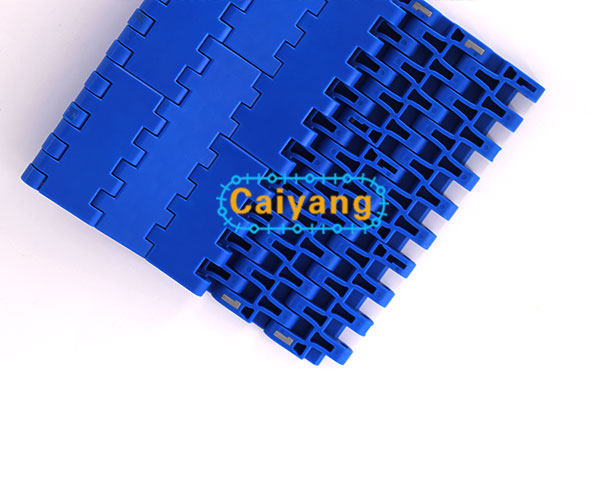
Engineering plastic slat chains are widely used in modern conveyor systems for food, beverage, packaging, logistics and pharmaceutical industries. Compared with metal chains, they feature lightweight structure, low noise, corrosion resistance and easy cleaning. The performance, service life and application scope of the slat chain are mainly determined by its raw material. This article introduces the most commonly used engineering plastics for slat chains, their characteristics, advantages and applicable working conditions.
1.POM
POM is the most mainstream material for modular slat chains.It is the first choice for heavy-duty, high-speed conveying lines.
- Core features: High rigidity, excellent wear resistance, low friction coefficient, good dimensional stability, strong fatigue resistance. It keeps stable performance under repeated start-stop and continuous operation.
- Temperature range: Approximately-40℃~90℃
- Advantages: Low elongation, not easy to deform; smooth surface, good for product transfer; resistant to many oils and detergents. Food-grade POM is available for direct food contact.
- Application: Beverage packaging lines, carton conveying, high-speed sorting lines, heavy-load slat chain conveyors.
- Note: Poor resistance to strong acid. Not suitable for environments with strong acidic cleaning liquid.
2.PP
PP is a common food-grade engineering plastic, favored for wet and low-temperature scenarios.
- Core features: Excellent hydrolysis resistance, good low-temperature performance, lightweight, food-safe, low cost.
- Temperature range: Approximately-40℃~80℃
- Advantages: Can withstand frequent hot water and CIP cleaning; suitable for frozen food, meat and seafood processing lines.
- Application: Frozen food conveying, meat cutting lines, aquatic product processing, regular washing conveyor lines.
- Note: Lower wear resistance than POM. Not recommended for high-speed, heavy-load long-time running.
3.PE
HDPE is often used for special low-friction or anti-adhesion slat chains.
- Core features: Very low friction, good impact resistance, excellent chemical resistance.
- Advantages: Not easy to stick to sticky food; resistant to many chemicals.
- Application: Sticky food, dough, dairy products, chemical industry light conveying.
- Note: Low rigidity, easy to creep under heavy load, not fit for high-speed long-distance conveying.
4.PA
Nylon slat chains are used for special high-impact and high-load occasions.
- Core features: Great toughness, high impact resistance, good tensile strength.
- Advantages: Strong impact resistance, suitable for lines with frequent impact.
- Note: Obvious water absorption. Dimensions will change after absorbing water; not ideal for wet food lines.
- Application: Dry heavy-duty industrial conveying, special material handling.
5.Special Modified Materials
According to customer requirements, manufacturers will add modifiers to base plastics to achieve customized properties:
- Anti-static modified plastic: For electronic industry, prevent static damage to products.
- Flame-retardant modified plastic: For factories with fire-proof requirements.
- UV-resistant modified plastic: For outdoor conveyor lines, slow aging under sunlight.
- Anti-slip composite material: With anti-slip texture or rubber composite surface for climbing conveyors.
Comparison & Selection Guide
1.If you need high speed, heavy load, long service life→ChoosePOM
2.If it is food processing, frequent water washing, frozen environment→ChooseFood-grade PP
3.If handling sticky goods, chemical corrosion environment→ChooseHDPE
4.Dry lines with frequent impact→ChooseNylon PA
5.Electronic products conveying→Anti-static modified material
Conclusion
There is no universal “best” material for plastic slat chains. The correct selection should be based on working temperature, load, running speed, cleaning method, whether contacting food and chemical environment. Improper material selection will lead to premature wear, deformation, cracking or hygiene risks.
Our team can recommend the most suitable material and structure according to your conveyor working conditions. More details, welcome to contact Shanghai Caiyang.