
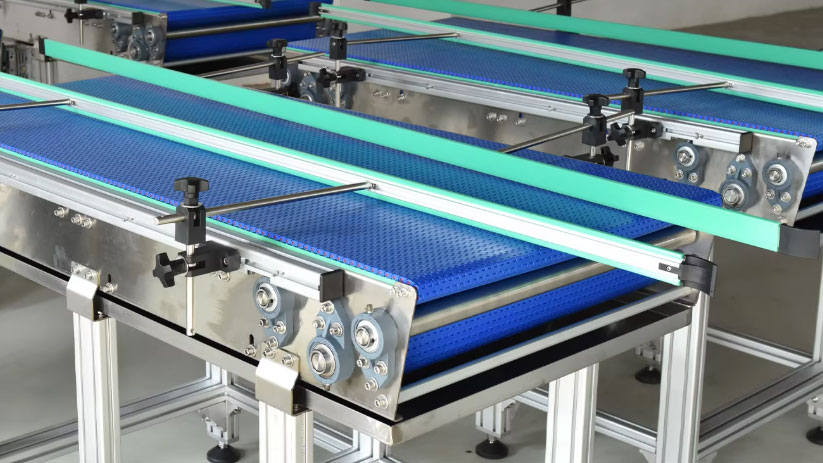
Chain Plate Conveyor Installation and Maintenance Precautions
Chain Plate Conveyor Installation and Maintenance Precautions
I. Installation Precautions
The installation process directly determines the stability and service life of the conveyor. The following specifications must be strictly followed to prevent unauthorized operations that could lead to safety hazards and equipment failure.
1. Pre-Installation Preparation
– Before installation, verify the models and specifications of all conveyor components (chain plates, frame, sprockets, motor, reducer, etc.) to ensure they match the design drawings. Check that components are free from deformation, damage, and rust. Ensure all connecting parts (bolts, nuts, pins, etc.) are complete and secure. Ensure the chain plates are free from breakage, deformation, and pitch deviation.
– Clean the installation site, ensuring it is flat and free of debris. Leave sufficient operating space (at least 50cm on both sides and ends) to avoid affecting installation and subsequent maintenance. If the installation site has a slope, take anti-slip and securing measures in advance to prevent equipment displacement during installation.
– Inspect the installation foundation to ensure its strength meets equipment requirements, flatness error ≤3mm/m, and the foundation surface is free of protrusions and depressions. Uneven foundations can cause excessive vibration during conveyor operation, damaging the chain plates and frame.
2. On-site Installation Specifications
– Frame Installation: First, fix the frame base, adjust the frame’s level and verticality, ensuring the frame centerline deviation is ≤2mm/m and the parallelism deviation on both sides of the frame is ≤3mm. Tighten the fixing bolts symmetrically, with torque meeting the equipment manual requirements, to prevent the frame from loosening or shifting.
– Chain Plate and Sprocket Installation: When installing sprockets, ensure the center lines of the two sprockets are parallel, and the sprocket teeth are perpendicular to the center line of the frame, with a deviation ≤1mm, to prevent the chain plate from running off-center. When installing chain plates, ensure precise splicing according to the pitch, tight fit at the joints, proper installation of pins, and secure fixing with cotter pins, avoiding any looseness or jamming. The chain plate tension must be adjusted appropriately; excessive looseness can cause slippage and off-center running, while excessive tightness increases motor load and accelerates wear on the chain plates and sprockets.
– Motor and Reducer Installation: When connecting the motor, reducer, and conveyor drive shaft, the coaxiality deviation should be ≤0.2mm. The coupling should be securely installed without looseness or eccentricity. Wiring must be standardized, and grounding protection must be in place to prevent short circuits and leakage. The motor rotation direction must be consistent with the conveyor’s running direction; reverse wiring is strictly prohibited.
– Auxiliary Component Installation: Side guards, side plates, and guide devices must be securely installed with uniform gaps (≤5mm) between them and the chain plates to avoid scratching. If the conveyor involves climbing slopes or turning, anti-slip and anti-detachment devices must be installed. At turns, the chain plates must fit tightly against the guide rails to ensure smooth operation.
3. Post-Installation Commissioning
– After installation, conduct a no-load test run for at least 30 minutes, observing the chain plate’s operating status. Check for any deviation, slippage, abnormal noise, jamming, etc., and ensure smooth engagement between the sprockets and chain plates. Verify the motor and reducer temperatures are normal (≤75℃).
– After a successful no-load test run, conduct a load test run, gradually increasing the load (starting from 50% of the rated load and gradually increasing to 100%). Observe the equipment’s operational stability, whether the chain plate’s load-bearing capacity meets requirements, and whether the connecting parts are loose. If any problems are found, immediately stop the machine for repair. Operating with faults is strictly prohibited.
– After successful commissioning, maintain a detailed installation record, noting the installation date, commissioning results, component models, etc., for future maintenance reference. II. Maintenance Precautions
Daily maintenance is crucial for extending the service life of the conveyor and reducing downtime. A regular maintenance system should be established, encompassing daily inspections, periodic maintenance, and troubleshooting to ensure continuous and stable equipment operation.
1. Daily Inspections (Before, During, and After Daily Operation)
– Before Operation: Check the chain tension; adjust promptly if loose. Check the chain interfaces, pins, and cotter pins for integrity, looseness, or detachment. Check the sprocket teeth for wear or deformation, and for debris at the meshing points. Check the lubrication levels of the motor and reducer; replenish if insufficient. Check the wiring and grounding for damage or looseness.
– During operation: Observe the conveyor’s operating status. Ensure the chain plates are not misaligned, slipping, or making abnormal noises. Check the motor and reducer for abnormal vibrations and overheating. Inspect the material conveying process to prevent material accumulation and jamming, and to prevent overload damage to the chain plates. If any abnormality is found, immediately stop the machine, disconnect the power supply, and then inspect and handle the issue. Never touch the chain plates, sprockets, or other rotating parts by hand while the conveyor is running.
– After operation: Clean the chain plate surface and the frame of any material residue and debris to prevent corrosion and blockage of the guide rails. Inspect the chain plates for wear, deformation, or breakage, and check for loose connections. Turn off the power, complete the inspection record, and note any abnormalities and their handling results.
2. Regular maintenance (based on the equipment manual and usage frequency)
– Weekly maintenance: Apply lubricating oil (using a lubricating oil model compatible with the equipment) to rotating parts such as the chain plates, sprockets, and guide rails to ensure adequate lubrication and reduce wear. Inspect the frame bolts and connections, and tighten any loose parts promptly. Clean dust from the motor and reducer surfaces and check for proper heat dissipation.
– Monthly Maintenance: Check the chain plate wear. If the chain plate thickness wear exceeds 10% of the original thickness or the pitch deviation exceeds 0.5mm, replace it immediately. Check the sprocket tooth wear; replace the sprocket if the tooth wear is severe. Check the quality of the lubricating oil in the motor and reducer; replace it completely if the lubricating oil is deteriorated or cloudy. Check the guide device, sidewalls, and other auxiliary components for deformation or damage; repair or replace them promptly.
– Quarterly Maintenance: Perform a comprehensive disassembly and inspection of the conveyor, cleaning internal debris and dust. Check the bearing wear; replace the bearings if abnormal noise or jamming occurs. Check the wear at the chain plate interfaces; replace worn pins and cotter pins promptly. Perform rust removal and anti-corrosion treatment on the frame to extend the equipment’s service life.
3. Troubleshooting Precautions
– Before troubleshooting any fault, the power must be disconnected first. Display a “Do Not Operate, Under Maintenance” sign. Never operate while the power is on to prevent electric shock or mechanical injury accidents.
– Chain plate misalignment: First, check the levelness of the frame and the parallelism of the sprockets, and adjust the position of the frame or sprockets. If the chain plate tension is uneven, adjust the tensioning device. If the guide rail is worn or deformed, repair or replace the guide rail to ensure the chain plate runs normally.
– Chain plate slippage: Check the chain plate tension and adjust it promptly. Clean debris from the sprocket teeth, check the wear of the sprocket teeth, and replace the sprocket if necessary. If the load is too high, reduce the load to avoid overload operation.
– Chain plate breakage or deformation: Stop the machine immediately and replace the damaged chain plate unit. When replacing, ensure consistent pitch, tight fit of the interface, and secure pin fixing. Investigate the cause of the breakage (overload, wear, foreign object jamming, etc.), and thoroughly resolve the issue before resuming operation.
– Motor and reducer malfunction: If the motor overheats, check the load, lubrication level, and heat dissipation, and troubleshoot promptly. If the reducer makes abnormal noise or leaks oil, check the lubrication quality and bearing wear. Disassemble and repair if necessary; do not force operation.
III. General Safety Precautions
– Operators must undergo professional training and be familiar with the equipment structure, operating procedures, and safety precautions before operating the equipment. Unlicensed operation is strictly prohibited.
– When the equipment is running, never touch rotating parts (chain plates, sprockets, motor shafts, etc.) with your hands or tools. Never pile debris on or beside the conveyor to prevent accidents.
– Maintenance and repair must be performed by qualified personnel. Unauthorized disassembly of equipment parts is strictly prohibited. Replacement parts must be of the same model as the original to avoid equipment malfunctions due to incompatible parts.
– For conveyors that will be out of service for an extended period, first clean the surface and interior of the equipment of debris and dust. Apply anti-rust oil to chain plates, sprockets, and other parts. Disconnect the power supply and take protective measures to prevent corrosion and damage.
– Regularly conduct safety training for operators, popularizing emergency response methods to ensure timely and standardized handling of sudden malfunctions and minimize losses.