
Modular plastic chain plate supplier
Ball Turning Slat Chain VS Ordinary Side-Flexing Slat Chain: What’s The Difference?
When designing curved conveyor layouts for food and packaging production lines, engineers often face a key selection question: should they adopt ball turning slat chain or ordinary side-flexing slat chain? Both two types of slat chains can complete corner-turning transportation, but they differ greatly in structural principle, running performance and applicable working conditions.
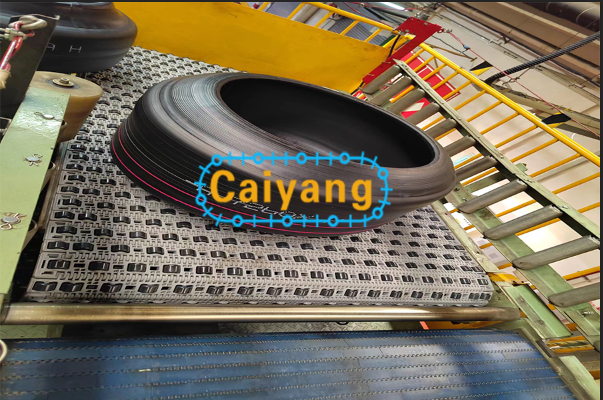
The ordinary side-flexing slat chain realizes lateral turning by enlarging the hinge clearance between chain plates. When the conveyor goes through curved sections, the whole chain itself bends sideways. It is a widely-used standard curved conveyor chain for many years. Its biggest advantage is relatively low manufacturing cost. However, there are inherent drawbacks brought by hinge-type lateral bending. During corner operation, the chain plate will produce sliding friction against the guide rail. Friction force rises obviously at high-speed continuous running, which will generate heat, increase wear and bring large operating noise. What is more, when products are accumulated on the curved segment, the sliding friction between goods and chain surface may cause bottle tipping, product shifting or surface scratch. For production lines with frequent product accumulation, ordinary side-flexing slat chain has obvious limitations.
Different from hinge-bending design of conventional models, the ball turning slat chain is equipped with built-in rolling balls on chain plate surface. The chain itself does not rely entirely on its own side bending to finish corner movement. When passing through curved sections, the embedded rolling balls rotate freely. It converts sliding friction between products and chain surface into rolling friction. This core structural improvement brings several prominent benefits. First of all, product accumulation performance is greatly optimized. Even if goods stay and accumulate on curved conveyor segment, rotating balls can release extrusion friction, effectively preventing bottle overturning and surface abrasion. Secondly, the overall running noise is reduced, and the wear degree between conveyed goods and chain surface is minimized. It performs well for high-speed bottling, beverage and food packaging lines where product accumulation is frequently required.
Nevertheless, ball turning slat chain also has its own constraints. Due to additional ball components, its production cost is higher than ordinary side-flexing slat chain. Meanwhile, attention shall be paid to daily cleaning work. Food residue may fail into ball gaps during food production, so regular washing and maintenance are required to keep rolling parts flexible.
To make a reasonable choice between these two slat chains:
Choose ordinary side-flexing slat chain, if your production line rarely accumulates products on curved sections and you focus on controlling procurement cost.
Choose ball turning slat chain, if your process involves frequent product accumulation on corner conveyor, high running speed and strict requirements for protecting finished goods from scratch and tipping.
There is no absolute better product, the final decision should be made according to your actual process requirement.
If you want to know more details, welcome to contact Shanghai Caiyang.
If interested, feel free to contact us — Shanghai Caiyang Plastic Products Co., Ltd.
shanghaicaiyang
+86 17317161237
sales@caiyangbelt.com
https://caiyangbelt.com/